How to Check My NFT: Verify Ownership, Authenticity, and Value

You just bought an NFT. Or maybe you’ve held one for years and want to know if it’s still worth anything. Or you’re about to buy one and want to make sure it’s not a fake.

Whatever the reason, checking your NFT properly means verifying more than just the image. It means confirming who actually owns it, whether the creator is legitimate, where the file is stored, and what the market says it’s worth.

This guide covers every way to check your NFT – using free tools that anyone can access today.


What Does It Mean to “Check” an NFT?

When people search “check my NFT,” they usually want one (or more) of these things: verify that the NFT is authentic, confirm who owns it, see it in their wallet, inspect its metadata, check whether the file is stored safely, or find out what it’s worth.

All of this is possible because every NFT lives on a public blockchain. Each token has two pieces of identifying information: a contract address (which identifies the collection) and a Token ID (which identifies the specific item within that collection). Together, they act as your NFT’s fingerprint.

Everything about that NFT – who created it, when it was minted, every transaction it’s been involved in, and who holds it right now – is permanently recorded on the blockchain and visible to anyone. This transparency is what makes verification possible.

Your NFT also has metadata: a JSON file containing the name, description, image URL, and attributes (traits like “Background: Blue” or “Eyes: Laser”). The tokenURI field in the smart contract points to this metadata. Understanding where that metadata lives and what it contains is essential for checking your NFT thoroughly.


How to Check NFT Ownership

Ownership verification answers a simple question: does this wallet actually hold this NFT?

Using a Blockchain Explorer

A blockchain explorer is a search engine for the blockchain. You enter an address, transaction hash, or token identifier, and it returns every piece of public data associated with it.

For Ethereum NFTs, use Etherscan. Navigate to the contract address of the NFT collection, then search for your Token ID. You’ll see the current owner’s wallet address, the creation date, every transfer in the token’s history, and the smart contract details.

For Solana NFTs, use Solscan or Solana Explorer. For Polygon, use PolygonScan. Each works the same way – enter the contract address or Token ID and inspect the results.

For multi-chain checking, NFTScan supports over 20 blockchain networks – including Ethereum, Solana, BNB Chain, Polygon, Arbitrum, Optimism, Base, and more – from a single interface. You can enter any wallet address or collection and see all associated NFTs and transactions across chains.

What to look for: compare the current owner’s address with the seller’s address on the marketplace. If they don’t match, the person listing the NFT may not actually own it.

Using OpenSea or Another Marketplace

If you prefer a visual interface, go directly to the NFT’s page on a marketplace like OpenSea.

Every NFT listing on OpenSea has a “Details” section that shows the contract address, Token ID, token standard (ERC-721 or ERC-1155), the blockchain it lives on, and the current owner. You can also see the full transaction history – every mint, transfer, and sale.

You can navigate directly to any NFT on OpenSea using the URL format: opensea.io/assets/[blockchain]/[contract_address]/[token_id].

This method is beginner-friendly but has a limitation: it only works for NFTs that are indexed by that marketplace. If the NFT isn’t listed on OpenSea, you won’t find it there – use a blockchain explorer instead.

Viewing NFTs in Your Wallet

Sometimes “check my NFT” simply means “I want to see what I own.”

MetaMask has an NFTs tab that displays tokens associated with your wallet. However, MetaMask doesn’t always auto-detect every NFT. If yours isn’t showing up, you can import it manually: click “Import NFT” and enter the contract address and Token ID.

Phantom wallet automatically detects and displays Solana-based NFTs with no manual steps needed.

Coinbase Wallet supports NFTs across multiple blockchains and displays them in a dedicated gallery view.

For a broader view of everything you own across multiple wallets and chains, portfolio trackers like DeBank, Zerion, and Zapper aggregate your NFTs into a single dashboard. These are especially useful if you hold NFTs on different blockchains or across several wallets.


How to Verify NFT Authenticity

Ownership tells you who holds the token. Authenticity tells you whether the token is what it claims to be. This is the more critical check – especially before buying.

Check the Creator’s Verified Status

Start on the marketplace. Legitimate collections on OpenSea and other platforms display a verified badge (blue checkmark) next to the collection name. This means the creator has been authenticated by the platform.

If there’s no badge, cross-reference the creator. Check their official website, Twitter/X profile, and Instagram. Real artists and projects post about their releases, share minting announcements, and engage with their community. If you can’t find any online presence for the creator, proceed with extreme caution.

Inspect the Blockchain History

Open the NFT in a blockchain explorer and examine its history:

  • Creation date – when was this NFT minted? Does it align with the project’s known launch date?
  • Original minter’s address – does the minting wallet match the official creator’s known wallet?
  • Resale frequency – has this NFT changed hands an unusual number of times in a short period? Rapid flipping can indicate wash trading.
  • Interactions with suspicious addresses – are there transfers to and from wallets with no other activity?

Look for gaps or anomalies in the ownership chain. A clean, consistent history from a verified creator wallet is what you want to see.

Run a Reverse Image Search

This is one of the simplest and most effective fraud detection techniques – yet almost nobody talks about it.

Download the NFT image, then upload it to TinEye or Google Lens. These tools search the internet for visually similar or identical images. If matches appear that predate the mint date, the artwork was likely stolen from another artist and minted without permission.

This technique would have caught one of the most famous NFT scams: a fake Banksy NFT that sold for over $300,000. A quick reverse image search would have revealed the original source.

Search for Duplicates Across Marketplaces

Scammers frequently list the same stolen artwork on multiple platforms simultaneously. Search the NFT’s title, description, and image across OpenSea, Magic Eden, Rarible, and other marketplaces.

Because each blockchain creates unique identifiers, the same artwork appearing on multiple chains from different seller wallets is a major red flag. Legitimate creators occasionally mint on multiple chains, but they do so from verified accounts with consistent branding.


How to Check NFT Metadata and Storage

Metadata quality determines whether your NFT will survive long-term. If the metadata or the file it points to breaks, your NFT becomes a token pointing to nothing.

What Is NFT Metadata?

Every NFT has associated metadata – a small JSON file that typically contains:

  • name – the title of the NFT
  • description – what the artwork is about
  • image – a URL pointing to the actual image or media file
  • attributes – traits and properties (background, accessory, rarity tier, etc.)

The smart contract stores a tokenURI that points to this JSON. The JSON, in turn, points to the image. The image itself is almost never stored directly on the blockchain – it’s too expensive. Instead, it’s hosted somewhere else. Where it’s hosted matters enormously.

IPFS vs. Arweave vs. Centralized Storage

On-chain storage: the image data is embedded directly in the smart contract. This is permanent and can’t break, but it’s rare and expensive – only feasible for very small files (like the 24×24 pixel CryptoPunks).

IPFS (InterPlanetary File System): a decentralized storage network where files are addressed by their content hash rather than a server location. As long as at least one node “pins” the file, it stays accessible. IPFS is the most common storage method for NFTs. Look for image URLs starting with ipfs://.

Arweave: a permanent, pay-once-store-forever decentralized protocol. Once a file is uploaded to Arweave, it exists permanently. This is the gold standard for NFT storage.

Centralized server: the file is hosted on a regular web server (URL starts with https://somecompany.com/...). If that company shuts down, changes its infrastructure, or simply deletes the file, your NFT’s image disappears. This is the riskiest option and is more common than most people realize.

How to Inspect Your NFT’s Metadata

On OpenSea: go to your NFT’s page → scroll to “Details” → look for the metadata status. Some NFTs show a “Frozen” metadata badge, meaning the metadata is permanently stored and can’t be changed.

On Etherscan: go to the collection’s contract address → click “Read Contract” → find the tokenURI function → enter your Token ID → the result is the URL to your metadata JSON. Open it in a browser to see the raw data, including the image URL.

Using NFTScan: enter any wallet address or collection across 20+ supported blockchains. NFTScan parses and displays metadata for all indexed NFTs, making it easy to inspect without reading raw contract data.

Check what your image URL starts with: ipfs:// (good), ar:// (great – Arweave), or https:// pointing to a regular server (risky). If it’s on a centralized server, consider migrating it. The legacy CheckMyNFT tool was specifically designed to evaluate metadata quality and migrate assets from IPFS to Arweave for permanent storage.


How to Check NFT Value and Floor Price

Checking your NFT’s market value requires understanding two concepts: floor price and rarity.

Floor price is the lowest listed price for any NFT in a collection. It represents the minimum someone is willing to pay to own any piece from that collection. If the floor of a 10,000-piece collection is 0.5 ETH, that’s the baseline value.

NFT Price Floor (nftpricefloor.com) is the most focused tool for this. It tracks floor prices, historical price charts, sales data, and trade volume across top collections. You can see how a collection’s floor has moved over weeks, months, or years – essential for understanding whether your NFT is gaining or losing value.

OpenSea shows three key price metrics on every NFT page: last sale price, current best offer, and collection floor price. This gives you an instant snapshot of where your specific NFT sits relative to the collection.

Rarity tools like Rarity Sniper and rarity.tools rank individual NFTs within collections based on trait rarity scores. An NFT with rare traits (e.g., only 50 out of 10,000 have a “Gold Crown” attribute) will typically command a higher price than one with common traits, even within the same collection.

For deeper analytics, platforms like Nansen and DeBank combine on-chain data with wallet profiling, trading patterns, and social signals. These are more advanced and often used by active traders and analysts.


Red Flags: How to Spot a Fake NFT

Before buying any NFT, run through this checklist:

No verified badge. If the collection or creator isn’t verified on the marketplace, dig deeper before trusting it. Verification doesn’t guarantee quality, but its absence should raise your antenna.

Copied or suspiciously familiar artwork. If the art looks like a well-known collection but the collection name is slightly different (e.g., “Bored Apes Yatch Club” instead of “Bored Ape Yacht Club”), it’s almost certainly a copycat scam.

Price too good to be true. A rare CryptoPunk listed for 0.01 ETH is not a deal – it’s a trap. Suspiciously low prices on supposedly high-value items are a classic bait technique.

No creator presence online. Legitimate artists have social media accounts, portfolios, or community channels. If you can’t find the creator anywhere outside the marketplace listing, that’s a warning sign.

Reverse image search returns earlier matches. If TinEye or Google Lens finds the same artwork posted before the NFT was minted, the art was stolen.

Same artwork on multiple platforms from different wallets. Scammers cast wide nets. Check for duplicates across OpenSea, Magic Eden, Rarible, and others.

Metadata points to a centralized server. An image hosted on https://randomstartup.com/images/nft.png could vanish at any time. Prefer NFTs stored on IPFS or Arweave.

Anomalous transaction history. Rapid transfers between a small number of wallets may indicate wash trading designed to inflate the perceived demand.

Sleepminting. An advanced technique where a scammer mints an NFT inside a famous artist’s wallet and transfers it back to their own. The NFT appears to originate from the artist, but a careful look at the transaction history reveals the deception. Always check the actual minting transaction, not just the “created by” display.


Best Tools to Check Your NFT

Here’s a quick-reference guide to the tools mentioned throughout this article and what each does best:

NFTScan – multi-chain NFT explorer covering 20+ blockchains. View metadata, ownership, transaction history, and collection analytics from a single interface. Also offers API for developers. Best for: comprehensive multi-chain checking.

OpenSea – the largest NFT marketplace. View NFT details, ownership, transaction history, price data, and metadata status. Supports 9 blockchains. Best for: quick visual inspection and price checking.

Etherscan / Solscan / PolygonScan – free blockchain explorers for Ethereum, Solana, and Polygon respectively. Raw on-chain data: contract details, token transfers, wallet history. Best for: deep ownership and transaction verification.

NFT Price Floor – tracks floor prices, historical charts, sales volume, and collection rankings. Best for: evaluating collection-level value trends.

Rarity Sniper / rarity.tools – rarity ranking tools that score individual NFTs based on trait distribution within collections. Best for: understanding how rare (and potentially valuable) your specific NFT is.

TinEye / Google Lens – reverse image search engines. Best for: detecting stolen artwork or duplicate NFTs.

DeBank / Zerion / Zapper – multi-wallet portfolio trackers. View all your NFTs across different wallets and blockchains in one dashboard. Best for: seeing everything you own in one place.

Nansen – advanced blockchain analytics with NFT tracking, wallet profiling, and market intelligence. Best for: serious traders and analysts.


Frequently Asked Questions

How do I find the contract address and Token ID of my NFT?

On OpenSea, go to your NFT’s page and scroll down to the “Details” section – you’ll see both the contract address and Token ID listed there. In MetaMask, click on the NFT and view its details. On any blockchain explorer, searching your wallet address and filtering by NFT transactions will also reveal this information. These two values are all you need to look up any NFT on any tool.

Can someone fake NFT ownership?

No. NFT ownership is recorded on the blockchain and is publicly verifiable. No one can alter the blockchain record to claim ownership of a token they don’t hold. However, scammers can create fake copies of popular NFTs (different contract address, same image) and list them as if they’re the real thing. That’s why verifying the contract address against the official collection is essential.

What happens if my NFT’s image link breaks?

If your NFT’s image is stored on a centralized server that goes offline, the token still exists on the blockchain – but it points to a dead link. Your NFT effectively becomes a receipt for nothing visible. This is called “link rot.” To prevent it, check whether your NFT’s metadata references IPFS or Arweave storage. If it points to a centralized URL, consider migrating the asset to permanent decentralized storage.

How do I check if an NFT is rare?

Use a rarity ranking tool like Rarity Sniper or rarity.tools. These platforms analyze every NFT in a collection and score them based on trait distribution. An NFT with attributes that appear in fewer than 1% of the collection will rank much higher than one with common traits. Rarity directly influences value – collectors pay premiums for the rarest pieces.

Is there a way to check NFTs across all blockchains at once?

Yes. NFTScan supports over 20 blockchain networks from a single interface, making it the broadest multi-chain NFT explorer available. For portfolio tracking across multiple wallets and chains, DeBank, Zerion, and Zapper each offer unified dashboards where you can connect multiple wallets and see all your NFTs regardless of which blockchain they live on.

Crypto30x.com: The Complete Guide to the Emerging Blockchain Platform (2026)

Discover everything about Crypto30x.com – its features, security, 30x leverage trading, AI-driven analysis, and whether the platform is worth your time. The definitive guide for 2026.


Whether you’re a crypto veteran or just dipping your toes into the blockchain world, you’ve probably come across Crypto30x.com in your research. With a name that promises aggressive returns and a feature set that covers everything from high-leverage trading to privacy-first VPN services, this platform has been generating serious buzz – and serious questions.

In this complete guide, we break down exactly what Crypto30x.com is, what it offers, how it stacks up on security, and what you need to know before you engage with it.


What Is Crypto30x.com?

Crypto30x.com is an emerging platform in the blockchain space that offers a comprehensive suite of services tailored to cryptocurrency enthusiasts, traders, and developers. Its mission is to simplify blockchain interactions and make them accessible to everyone – from complete beginners to seasoned professionals.

Across its ecosystem, Crypto30x.com addresses several major pain points in the crypto world: fragmented tools, complex interfaces, inadequate privacy, and the steep learning curve that keeps many people out of the market.

The platform currently serves users across 70+ countries, which speaks to both its ambition and its early traction in a competitive market.


Key Features of Crypto30x.com

1. 30x Leverage Trading

The name gives it away. Crypto30x.com’s flagship offering is 30x leverage trading – allowing traders to control positions up to 30 times their deposited capital. This is a major draw for experienced traders looking to amplify returns in volatile crypto markets.

That said, leverage is a double-edged sword. While it can multiply gains, it equally multiplies losses. The platform is clear about this risk, and users should approach leverage trading with a disciplined strategy and proper risk management.

2. AI-Driven Market Analysis

One of the standout differentiators of Crypto30x.com is its AI-powered analytical tools. Rather than forcing users to wade through mountains of raw market data, the platform’s AI layer processes trends, signals, and patterns in real time – surfacing actionable insights that would otherwise require hours of manual analysis.

This feature is particularly valuable for part-time traders and newcomers who lack the bandwidth or expertise to perform deep technical analysis independently.

3. Blockchain Developer Tools

Crypto30x.com isn’t just for traders. The platform also caters to developers building on top of blockchain infrastructure, offering tools and APIs designed to streamline development workflows in the Web3 space. This positions it as more of an ecosystem than a simple trading platform.

4. Crypto30x VPN

Perhaps the most unexpected product in the Crypto30x ecosystem is its privacy-focused VPN service, available on both Android and iOS. The Crypto30x VPN is built with the crypto community in mind, combining:

  • Advanced end-to-end encryption to protect user data
  • No-log technology to ensure anonymity
  • A focus on keeping identity and activity completely private

For crypto traders, this kind of privacy layer isn’t just a nice-to-have – it’s increasingly a necessity in an era of growing surveillance and cyber threats targeting high-value wallets.

5. Education and Community Resources

Crypto30x.com also invests in user education, offering resources, guides, and market analysis content designed to bring users up to speed on DeFi, NFTs, and broader investment strategies. This reflects a platform philosophy of long-term community building, not just transactional engagement.


Crypto30x.com Security: What You Need to Know

Security is the elephant in the room for any crypto platform, and Crypto30x.com has put significant infrastructure in place to address it. Here’s what’s reported:

  • High-level encryption protecting user data and all transactions
  • Two-Factor Authentication (2FA) as a standard access control layer
  • Ongoing security protocols designed to guard against unauthorized access and data breaches

While no platform can claim to be 100% impenetrable, these are foundational best practices that any serious crypto service should have in place. Users are also advised to practice good personal security hygiene – using unique passwords, enabling 2FA, and only accessing the platform on secure connections (ideally with the Crypto30x VPN enabled).


Is Crypto30x.com Legitimate? Addressing the Skepticism

No honest review of Crypto30x.com would be complete without addressing the skepticism found in corners of the internet. Some online forums and Quora threads have raised red flags, with users citing concerns about platform transparency and withdrawal issues.

Here’s a balanced take:

Reasons for caution:

  • High-leverage trading carries inherent risk for unsophisticated investors
  • Newer platforms with aggressive marketing can attract both legitimate users and bad actors
  • As with any financial platform, you should verify regulatory compliance in your jurisdiction before depositing funds

Reasons for optimism:

  • The platform’s presence across 70+ countries suggests real operational infrastructure
  • The breadth of its product suite (trading + developer tools + VPN) indicates a company building for the long term, not a quick exit
  • Coverage from established outlets like Binance Square and Blockchain Council suggests growing mainstream credibility

Our recommendation: Approach Crypto30x.com like any financial service – start small, verify its regulatory standing in your country, use only capital you can afford to risk, and take full advantage of its security features.


Who Is Crypto30x.com For?

User TypeWhat Crypto30x.com Offers
Active Traders30x leverage, AI-driven analysis, real-time market tools
Crypto BeginnersEducational resources, simplified blockchain interface
Blockchain DevelopersAPIs and development tools for Web3 building
Privacy-Conscious UsersCrypto30x VPN with no-log policy
International UsersAccess across 70+ countries

Getting Started with Crypto30x.com

If you’re considering exploring the platform, here’s a sensible onboarding approach:

  1. Visit crypto30x.com and review the platform’s terms, regulatory disclosures, and fee structures
  2. Download the Crypto30x VPN from the Google Play Store or Apple App Store – free, and a smart first step regardless of what else you do
  3. Create an account and explore the interface in paper-trading mode before committing real funds
  4. Enable 2FA immediately – non-negotiable for any crypto platform
  5. Start with low leverage (5x or less) until you’re comfortable with how the platform’s execution and liquidation mechanisms work
  6. Leverage the AI tools to build market intuition before making independent decisions

The Bottom Line on Crypto30x.com

Crypto30x.com is a platform with genuine ambition: it wants to be the one-stop blockchain hub for traders, developers, and privacy-conscious users worldwide. Its combination of high-leverage trading, AI analytics, developer tools, and a privacy VPN is genuinely differentiated in a crowded market.

As with any emerging platform in the crypto space, due diligence is essential. But for those willing to approach it thoughtfully, Crypto30x.com represents a compelling ecosystem worth watching closely in 2026 and beyond.


Frequently Asked Questions

What does Crypto30x.com do? Crypto30x.com is a multi-service blockchain platform offering 30x leverage cryptocurrency trading, AI-driven market analysis, blockchain developer tools, and a privacy-focused VPN.

Is Crypto30x.com safe to use? The platform employs encryption, 2FA, and other standard security protocols. As with any crypto platform, users should verify regulatory compliance in their jurisdiction and use strong personal security practices.

What is the Crypto30x VPN? The Crypto30x VPN is a privacy-first VPN service built for crypto users, featuring advanced encryption and a strict no-log policy. It’s available on Android and iOS.

Is Crypto30x.com available in my country? The platform is available in 70+ countries. Check the platform’s website for specific regional availability and any applicable restrictions.

How much leverage does Crypto30x.com offer? Crypto30x.com offers up to 30x leverage on cryptocurrency trades – one of its primary selling points. Use leverage with caution and only with a clear risk management strategy.


How to Create NFT Art: A Step-by-Step Guide for Artists

Creating NFT art isn’t about chasing the next $69 million headline – those days are behind us. In 2026, NFT art is a practical tool for artists who want verifiable ownership, built-in royalties, and direct access to collectors without galleries or middlemen.

The good news: you don’t need to be a developer. You don’t even need to be a digital artist. If you can create something visual – whether that’s a Procreate illustration, an oil painting, or a set of AI-generated images – you can turn it into an NFT.

This guide walks you through the entire process, from your first sketch to your first sale.


What Is NFT Art?

NFT art is any artwork – digital or digitized – that has been minted as a non-fungible token on a blockchain. The NFT itself isn’t the artwork. It’s a unique digital certificate that proves who created it, who owns it, and the full history of every transaction since it was minted.

The artwork can be an image, a video, a GIF, a music file, a 3D model, or even an animation. Traditional painters, photographers, and illustrators can also participate by scanning or photographing their physical work and minting the digital version.

What makes NFT art different from a regular JPEG? Anyone can right-click and save the image. But only one person holds the token that proves ownership on the blockchain – and that ownership is public, permanent, and verifiable by anyone.


What You Need Before You Start

Before diving into the steps, make sure you have these ready:

Your artwork. Either a finished digital piece or a physical artwork you can scan at 300dpi or higher. Accepted formats vary by marketplace, but PNG, JPEG, GIF, SVG, MP4, and MP3 are standard.

A crypto wallet. This is where you’ll store cryptocurrency, pay gas fees, and receive payments from sales. MetaMask is the most common for Ethereum-based NFTs; Phantom works for Solana.

A small amount of cryptocurrency. You’ll need ETH, SOL, or MATIC (depending on your chosen blockchain) to cover minting fees. On some chains, this can be less than a dollar.

A marketplace account. OpenSea, Rarible, Magic Eden, or SuperRare – each has its own strengths, and your choice depends on your blockchain and art style.

Basic blockchain knowledge. You don’t need to understand smart contract code, but knowing which chain you’re on and why matters for costs, speed, and audience reach.


How to Create NFT Art: Step by Step

Step 1: Create or Digitize Your Artwork

You have two paths here.

Digital-native art. Create directly on screen using tools like Adobe Photoshop, Illustrator, Procreate (iPad), Blender (for 3D), or AI image generators like Midjourney, DALL-E, or Stable Diffusion. Any digital format works – static images, animated GIFs, looping videos, or audio-visual pieces.

Physical art gone digital. If you’re a painter, illustrator, or photographer, scan your work at a minimum of 300dpi. You can use a home scanner or visit a professional print shop for larger pieces. The goal is a high-resolution digital file that faithfully represents your original.

Before creating, spend time researching what’s currently selling. Browse top collections on OpenSea and Magic Eden. Notice patterns – themed series outperform random one-offs. Aim for a cohesive collection of at least 5–10 pieces that share a visual style, subject, or narrative.

For generative collections (thousands of unique variations), you create individual trait layers – backgrounds, bodies, eyes, accessories, clothing – that a tool combines randomly into unique pieces. No-code platforms like OneMint, BuenoArt, and Bueno handle this automatically. OneMint alone has generated over 3 million images across 250,000+ collections. You upload your layers, set rarity for each trait, and the tool generates every combination with matching metadata.

Step 2: Choose Your Blockchain

Your blockchain choice determines your costs, speed, audience, and which marketplaces you can use. Here’s how the main options compare for NFT minting in 2026:

Ethereum – the original and most established NFT blockchain, powering roughly 62% of all NFT contracts. It has the largest collector base and widest marketplace support. The downside is cost: minting fees typically range from $15–$50 during normal traffic and can spike to $100+ during congestion. Ethereum uses the ERC-721 token standard, which is the foundation of the NFT ecosystem. Since the September 2022 Merge to proof-of-stake, its energy consumption dropped by approximately 99.95%.

Solana – fast, cheap, and growing. Minting costs are typically under $0.01–$0.10 per transaction. Solana handles roughly 18% of NFT transactions and is favored by creators who want to experiment without high upfront costs. Magic Eden is the leading Solana marketplace.

Polygon – an Ethereum Layer 2 solution with extremely low fees (under $0.01 per mint). It’s compatible with Ethereum wallets and tools, which means you get Ethereum ecosystem access at a fraction of the cost. Brands like Starbucks and Nike have used Polygon for their NFT projects. OpenSea supports lazy minting on Polygon with zero upfront gas fees.

The bottom line: if you’re minting your first collection and want minimal financial risk, start with Polygon or Solana. If you’re targeting high-end collectors and can afford the fees, Ethereum offers the deepest market.

Step 3: Set Up a Crypto Wallet

Your wallet is your identity in the NFT world. It holds your crypto, stores your NFTs, and connects to marketplaces.

MetaMask is the most widely used wallet for Ethereum and Polygon. It’s available as a browser extension (Chrome, Firefox, Brave) and a mobile app. Setup takes minutes: install the extension, create a password, and you’ll receive a 12-word recovery phrase.

Phantom is the go-to wallet for Solana. Clean interface, fast, and built specifically for the Solana ecosystem.

Coinbase Wallet supports multiple chains and is beginner-friendly – a solid option if you’re already using Coinbase as an exchange.

Ledger Nano X is a hardware wallet for maximum security. Your private keys never touch the internet, which protects you from phishing attacks. Recommended if you plan to hold valuable NFTs long-term.

One critical rule: write down your recovery phrase on paper and store it somewhere safe. If you lose it, you lose access to your wallet permanently. No one can recover it for you – not the wallet company, not the marketplace, not the blockchain.

Step 4: Buy Cryptocurrency for Gas Fees

Gas fees are the cost of processing your transaction on the blockchain. They’re not a payment for the NFT itself – they’re the fee you pay to validators who confirm and record your mint.

Here’s what you’ll need:

  • Ethereum minting: Buy ETH. Budget $20–$100 to be safe, depending on network congestion.
  • Solana minting: Buy SOL. A few dollars is more than enough.
  • Polygon minting: Buy MATIC (or use lazy minting on OpenSea for zero upfront cost).

Purchase crypto on an exchange like Coinbase, Kraken, or Binance, then transfer it to your wallet address.

Pro tip: on Ethereum, gas fees fluctuate by the hour. Minting on weekends or during off-peak hours (2–6 AM UTC) can save you 40–60% compared to weekday peaks. Tools like Etherscan’s Gas Tracker show real-time prices.

Lazy minting is available on platforms like OpenSea and Rarible for Ethereum and Polygon. With lazy minting, you pay zero gas upfront – the buyer pays the minting fee when they purchase. This is the best option for new artists testing the market without financial risk.

Step 5: Choose a Marketplace and Connect Your Wallet

Each marketplace has a different vibe, audience, and fee structure.

OpenSea is the largest general-purpose NFT marketplace. It supports 9 blockchains (including Ethereum, Polygon, Solana, Arbitrum, Base, and more), accepts multiple wallet types, and charges a 2.5% fee on sales. It lists everything: art, photography, music, gaming items, domain names, and virtual worlds. Best for beginners and broad reach.

Rarible supports 8+ blockchains and offers flexible selling options – fixed price, timed auction, or open-bid auction with no time limit. It has a clean creator interface and its own RARI governance token.

SuperRare is a curated, invitation-based platform focused on high-end digital art. Ethereum only. If you want prestige and are willing to apply for approval, SuperRare connects you with serious collectors. The community of RARE token holders votes on which new artists to feature.

Magic Eden leads the Solana and Bitcoin Ordinals market. If you’re minting on Solana, this is your primary destination.

To connect: visit your chosen marketplace, click “Connect Wallet,” select your wallet provider (MetaMask, Phantom, etc.), and approve the connection in your wallet app. That’s it – you’re linked.

Step 6: Upload and Mint Your NFT

This is where your art becomes a token on the blockchain.

Click “Create” on your marketplace, then upload your file. You’ll be prompted to fill in:

  • Name – make it distinctive and searchable.
  • Description – tell the story behind the piece. What inspired it? What does it represent? Collectors value narrative.
  • Properties/Traits – for collections, add attributes like “Background: Blue,” “Eyes: Laser,” “Rarity: Legendary.” These are crucial for generative collections and help buyers filter and discover your work.
  • Unlockable content (optional) – bonus materials that only the buyer can access after purchase. This could be a high-resolution file, a behind-the-scenes video, a discount code, or an invitation to a private community.

You can mint a single piece (a 1/1, highly valued by collectors) or create an entire collection.

When you confirm, the marketplace will prompt you to approve the transaction in your wallet and pay the gas fee (unless you’re using lazy minting). Once confirmed, your NFT is live on the blockchain with a unique identifier, your wallet address as creator, and the metadata you entered.

Step 7: Set Your Price and List for Sale

You have several pricing strategies:

Fixed price – simplest option. You set the amount, and the first buyer who meets it gets the NFT. Best for new artists who want predictable outcomes.

English auction (timed) – you set a starting price and a deadline. Buyers bid against each other, and the highest bid wins when time runs out. Creates excitement and can drive the price above expectations.

Dutch auction (descending) – you set a high starting price that drops at regular intervals until someone buys. Useful for testing what the market will pay.

Open bid (no reserve) – no minimum price, no deadline. Buyers submit offers and you accept when you’re satisfied. Highest risk, but reveals your art’s true market value.

Don’t forget royalties. Most platforms let you set a royalty percentage – typically 5–10% – that you earn automatically every time your NFT is resold on the secondary market. This is one of the most powerful features for artists: you continue earning from your work indefinitely. Smart contracts handle this automatically with no intermediary.


How to Promote Your NFT Art

Minting your NFT is only half the job. Without promotion, even great art sits unsold. This is the step most guides skip – and it’s the one that matters most.

Build your audience before you mint. The artists who succeed in NFTs almost always had a following before they entered the space. A mailing list, an Instagram account, a Twitter/X presence – any existing audience gives you a head start.

Twitter/X is the hub. The NFT community lives on Twitter/X. Share your work-in-progress, your creative process, and engage with other artists and collectors. Use relevant hashtags, join Spaces conversations, and be genuinely present – not just promotional.

Discord is for community. Many successful NFT projects run Discord servers where collectors gather. Join existing communities, contribute meaningfully, and eventually build your own. A Discord server turns one-time buyers into long-term supporters.

Tell the story. Collectors don’t just buy images – they buy into narratives. Why did you create this collection? What does it mean to you? What world does it live in? Digital storytelling turns anonymous art into something people want to own.

Collaborate. Partner with other NFT artists for cross-promotion. Feature each other’s work, create joint collections, or host joint Twitter Spaces. The NFT art community rewards generosity and collaboration over self-promotion.

Be consistent. One drop and silence doesn’t build a collector base. Regular releases, updates, and engagement build trust. Treat your NFT art like a brand, not a lottery ticket.


Best Tools for Creating NFT Art

Art Creation Tools

For digital painting and illustration: Adobe Photoshop, Adobe Illustrator, Procreate (iPad), Clip Studio Paint, Krita (free).

For 3D art: Blender (free, open-source), Cinema 4D, ZBrush.

For AI-assisted art: Midjourney, DALL-E, Stable Diffusion, Adobe Firefly. These can generate base images that you then refine, or serve as creative starting points.

For traditional art: a scanner at 300dpi minimum (home scanner or professional service like FedEx/Kinkos). For large canvases, a high-resolution camera with consistent lighting works too.

Generative Collection Tools

If you want to create thousands of unique variations from trait layers (the way Bored Apes and CryptoPunks were made), these no-code tools handle the entire process:

OneMint (nft-generator.art) – $100 flat fee. Supports Ethereum, Solana, Polygon, Binance, MultiversX. Includes smart contract deployment, rarity settings, metadata generation, GIF/video export, and dynamic NFTs. Over 3 million images generated to date.

BuenoArt – 1 ETH + 5% of sales. Includes art generation, smart contracts, and access list management.

NFTInator– $149.99 + 2% + $99. Includes art generation, smart contracts, and basic rules.

All three let you upload trait layers, configure rarity, preview combinations, and export ready-to-mint collections with compliant metadata – zero coding required.

Wallets and Marketplaces at a Glance

Wallets: MetaMask (Ethereum/Polygon), Phantom (Solana), Coinbase Wallet (multi-chain), Ledger Nano X (hardware security).

Marketplaces: OpenSea (largest, multi-chain), Rarible (flexible auctions), SuperRare (curated high-end), Magic Eden (Solana/Ordinals), Foundation (curated, Ethereum).


NFT Collections That Inspire

Looking at successful projects can sharpen your creative direction. Here are four that defined different approaches:

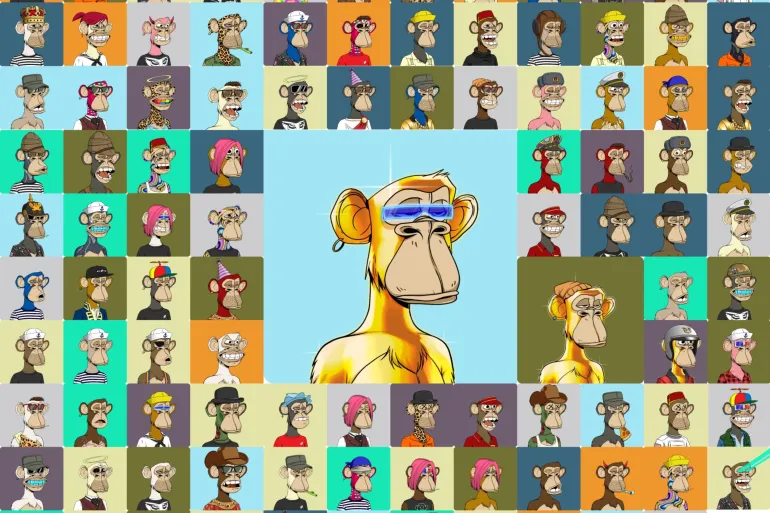
Bored Ape Yacht Club – 10,000 unique generative apes, each assembled from randomized trait layers. Ownership grants IP rights to holders, access to private online groups, exclusive merch, and real-world events. BAYC proved that collections thrive when they offer community and utility beyond the image itself.

CryptoPunks – 10,000 algorithmically generated 24×24 pixel characters, launched in 2017. Widely considered the first NFT collection on the blockchain. Countless varieties of hats, glasses, hairstyles, and accessories. The project showed that simplicity and scarcity create collector obsession.

Cool Cats – 9,999 randomly generated cartoon cats. Holders receive raffles, giveaways, and community benefits. A more accessible, lighthearted entry point to the generative collection space.

World of Women – 10,000 digital portraits celebrating women from diverse backgrounds. Inspired by Frida Kahlo and other iconic female artists. The project actively supports women’s rights movements and demonstrated that NFTs can carry real social purpose.

Each of these collections succeeds because it combines strong art with a clear narrative, community, and something beyond the image.


Common Mistakes to Avoid

Minting without an audience. The biggest mistake new NFT artists make is listing art and expecting buyers to find it. No audience means no sales. Build your presence first, even if it takes months.

Ignoring gas fee timing. On Ethereum, minting during peak hours can cost 5–10x more than off-peak. Check Etherscan Gas Tracker before you confirm any transaction. Or use Polygon/Solana to avoid this problem entirely.

Skipping royalties. If you don’t set royalty percentages during minting, you miss out on passive income from every future resale. Always configure this – 5–10% is standard.

Choosing the wrong blockchain for your audience. Ethereum has the most collectors but the highest fees. If your art is priced under $50, Ethereum gas fees could exceed the sale price. Match your chain to your price point and target market.

No collection theme or narrative. Random, unrelated pieces don’t build collector interest. A cohesive theme – visual style, subject matter, lore – gives buyers a reason to collect multiple pieces and follow your future work.

Neglecting metadata. Vague titles like “Untitled #47” and empty descriptions kill discoverability. Write compelling titles, detailed descriptions, and accurate trait properties. This is how buyers find and filter your work.

Not understanding copyright. When you sell an NFT, you sell the token – not necessarily the copyright. Unless you explicitly transfer intellectual property rights in your terms, you retain the copyright to the artwork. Make this clear to avoid disputes.

Storing art on centralized servers. If your NFT’s image is hosted on a regular web server and that server goes down, your NFT points to nothing. Use decentralized storage like IPFS (InterPlanetary File System) or Arweave for permanent, censorship-resistant file hosting. Most reputable marketplaces handle this automatically, but verify.


Is It Still Worth Creating NFT Art in 2026?

Let’s be honest: the speculative frenzy is over. The cumulative NFT market cap has dropped roughly 99% from its 2023 peak. Most art-focused NFTs from the 2021 boom are worthless. If you’re entering this space hoping to flip a JPEG for a quick fortune, the window for that closed years ago.

But here’s what’s still alive – and growing:

Artist royalties work. The ability to earn 5–10% on every resale, automatically, forever, is something traditional art markets have never offered. For working artists, this is genuinely revolutionary infrastructure.

Utility-based NFTs are expanding. Event tickets, loyalty programs, membership passes, identity verification – these are growing use cases where the token’s value comes from what it does, not speculation.

Enterprise adoption is real. Over 40% of Fortune 500 companies now use NFTs in some operational capacity. The technology matured even as the speculative market crashed.

Direct-to-collector relationships persist. Artists who built genuine communities around their work – not hype – still sell consistently. The market rewards authenticity and consistency over virality.

The honest advice: create NFT art because you believe in the work and want to explore a new distribution model. Treat royalties as a long-term play. Build community. And never invest more than you can afford to lose.


Frequently Asked Questions

How much does it cost to create an NFT?

It depends entirely on the blockchain. On Ethereum, minting costs typically range from $15–$50 during normal traffic but can spike much higher. On Solana, it’s usually under $0.10. On Polygon, minting can be essentially free using lazy minting (the buyer pays the gas fee upon purchase). Marketplace service fees (typically 2.5% on OpenSea) are additional and come out of the sale price.

Can I create an NFT for free?

Yes. OpenSea and Rarible support lazy minting on Ethereum and Polygon, which means you pay zero gas upfront. The NFT is minted on-chain only when a buyer purchases it, and the gas fee is covered by the buyer. Your only cost is the time spent creating the art and setting up the listing.

What file formats can be used for NFT art?

Most marketplaces accept PNG, JPEG, GIF, SVG, MP4, WEBM, MP3, WAV, GLB, and GLTF (for 3D). File size limits vary – OpenSea currently allows up to 50MB per file. For best results, use high-resolution PNG or JPEG for static images, MP4 for video, and GIF for animated loops.

Do I need to know coding to create an NFT?

No. Platforms like OpenSea, Rarible, and Magic Eden handle the entire minting process through a visual interface – upload, fill in details, confirm, done. For generative collections (thousands of unique pieces from trait layers), no-code tools like OneMint and BuenoArt eliminate the need for programming entirely.

Can I sell physical art as an NFT?

Yes. Scan or photograph your physical artwork at 300dpi or higher to create a high-quality digital file, then mint that file as an NFT. Some artists sell the NFT as a standalone digital collectible; others bundle it with the physical piece, using the NFT as a certificate of authenticity and provenance. The token proves the artwork’s origin and ownership history on the blockchain regardless of what happens to the physical piece.

What Is an NFT? A Complete Guide to Non-Fungible Tokens

In 2021, a single digital artwork sold for $91.8 million. By 2023, 95% of NFTs were reportedly worthless. And yet, in 2026, Fortune 500 companies are quietly using NFTs for supply chain tracking, event ticketing, and customer loyalty programs.

So what exactly is an NFT – and why does it still matter?

An NFT, or non-fungible token, is a unique digital identifier recorded on a blockchain that certifies ownership and authenticity of a specific asset. Think of it as a digital certificate of ownership that can’t be duplicated, forged, or tampered with.

This guide breaks down how NFTs work, what they’re used for, how to buy one, and whether they’re still worth your attention in 2026.


What Does NFT Stand For?

NFT stands for non-fungible token. To understand that, you need to understand “fungible” and “non-fungible.”

Fungible means interchangeable. A $20 bill can be swapped for two $10 bills and you still have $20. One Bitcoin is worth the same as any other Bitcoin on a given exchange. These are fungible assets – each unit is identical in value and function.

Non-fungible means unique. An original Van Gogh painting, a signed first-edition book, or a vintage baseball card – each of these has distinct qualities that make it irreplaceable. You can photograph the Mona Lisa, but the photograph isn’t the Mona Lisa.

NFTs work the same way, but in the digital world. Each NFT contains a unique identification code that distinguishes it from every other token, including copies of the same image or file. No two NFTs are identical, even if they reference the same underlying content.

The token part refers to its role as a digital certificate. When you buy an NFT, you don’t receive a physical object – you receive a token on a blockchain that proves you own that specific digital asset. That ownership record is public, permanent, and can’t be altered once written.


How Do NFTs Work?

At a high level, NFTs live on blockchains – decentralized digital ledgers that record transactions across thousands of computers. Here’s how the key mechanisms work.

The Minting Process

Creating an NFT is called minting. It’s the digital equivalent of printing a limited-edition collectible.

Here’s what happens: a creator takes a digital asset – an image, video, music file, or even a contract – and registers it on a blockchain. During minting, the asset’s unique information is encrypted and recorded as a new block. A validator on the network confirms the data, the block is closed, and the NFT is live. From that moment, it has a unique identifier tied to a single blockchain address, and its ownership history is publicly trackable.

Minting typically involves a transaction fee known as a gas fee, paid to the validators who process and secure the network.

Blockchain and Token Standards

Most NFTs are built on the Ethereum blockchain, which powers roughly 62% of all NFT contracts as of 2025. The foundational standard is ERC-721, published in 2018. It ensures that each token has unique attributes, ownership details, and transfer rules – no two tokens created under this standard are alike.

A second standard, ERC-1155, allows multiple NFTs to share a single smart contract, reducing gas fees and making batch operations more efficient.

Beyond Ethereum, other blockchains have entered the space:

  • Solana handles approximately 18% of NFT transactions, favored for its speed and low fees.
  • Polygon hosts around 11% of NFT minting activity, used by brands like Starbucks and Nike.
  • Bitcoin Ordinals, introduced in December 2022 by programmer Casey Rodarmor, brought NFTs to the Bitcoin blockchain by assigning serial numbers to individual satoshis (the smallest Bitcoin unit).

Smart Contracts and Royalties

Smart contracts are self-executing programs embedded in the blockchain. For NFTs, they automate two critical functions: ownership transfer and creator compensation.

When an NFT is sold, the smart contract handles the transaction without intermediaries. More importantly, creators can program royalties directly into the contract – for example, receiving 5% of every future resale. This means artists continue earning from their work long after the initial sale, automatically and transparently.

Smart contracts can also attach real-world perks. A musician might create NFTs where holders get lifetime concert access. A brand might offer exclusive merchandise to NFT owners. The token becomes a programmable key to experiences beyond the digital file itself.


What Are NFTs Used For?

While digital art dominated the early NFT narrative, the technology’s applications have expanded significantly.

Digital Art and Collectibles

This remains the most recognized use case. In 2021, digital artist Beeple sold his composite work Everydays: The First 5000 Days at Christie’s for $69.3 million – the first purely digital NFT sold by a major auction house. Artist Pak’s Merge holds the record as the most expensive NFT ever, selling for $91.8 million.

Generative art collections became cultural phenomena: CryptoPunks (10,000 algorithmically generated pixel characters), Bored Ape Yacht Club (which also granted holders intellectual property rights to their specific ape), and EtherRocks (yes, clipart rocks selling for six figures).

Profile picture NFTs, or PFPs, became a social currency – digital status symbols used as avatars across social media.

Gaming and Virtual Worlds

NFTs allow players to truly own in-game items – weapons, skins, land, characters – and trade them on third-party marketplaces outside the game’s ecosystem.

CryptoKitties, launched in November 2017, was the first mainstream blockchain game. Players bred and traded virtual cats, with some selling for over $100,000. The game was so popular it congested the entire Ethereum network.

Decentraland, also launched in 2017, lets users buy and sell virtual real estate as NFTs, with plot values determined by location and proximity to popular areas.

However, the gaming industry’s reception has been mixed. A 2022 Game Developers Conference survey found 70% of developers had no interest in integrating NFTs. Valve banned NFT-based games from Steam in October 2021. Mojang Studios prohibited NFTs in Minecraft. Ubisoft’s NFT initiative, Quartz, received a 96% dislike ratio on YouTube before the company unlisted the video.

As of 2026, only 2% of surveyed game developers actively use NFTs in their games, though gaming NFTs still represent roughly 25% of total NFT trading volume.

Music, Sports, Tickets, and Beyond

The scope of NFT use cases extends well beyond art and games:

  • Music: Artist Grimes earned $6 million from a single NFT auction. Musicians can tokenize songs and grant buyers specific rights while retaining others.
  • Sports: NBA Top Shot, launched in 2019 through a partnership between the NBA and Dapper Labs, lets fans buy NFT “moments” – short video highlights of iconic plays.
  • Event ticketing: NFT-based tickets now capture 5.3% of ticket sales across major US venues, offering built-in fraud prevention and resale control.
  • Identity: Over 12 million identity NFTs were issued by early 2026, supporting decentralized IDs and membership verification.
  • Real estate: Fractional property ownership via NFTs is gaining traction. Blackstone launched a fractional property ownership platform using NFTs in early 2025.
  • Supply chain and provenance: Ernst & Young developed an NFT solution for fine wine investors in 2019, using blockchain to verify provenance and authenticity.
  • Phygital goods: NFTs connecting physical products to digital tokens saw 60% transaction volume growth, particularly in luxury markets.

How to Buy an NFT

If you’re considering purchasing an NFT, here’s the basic process:

Step 1: Set up a crypto wallet. You’ll need a digital wallet that supports the blockchain your target NFT lives on. MetaMask is the most popular for Ethereum-based NFTs. Phantom is common for Solana.

Step 2: Buy cryptocurrency. Most NFTs are priced in ETH (Ethereum) or SOL (Solana). Purchase the relevant crypto through an exchange like Coinbase, Kraken, or Binance, then transfer it to your wallet.

Step 3: Choose a marketplace. The major platforms include:

  • OpenSea – the largest general marketplace, now also supporting fungible token trading.
  • Magic Eden – leading platform for Solana and Bitcoin Ordinals.
  • Blur – captured 38% of Ethereum NFT volume in early 2026, popular among active traders.
  • SuperRare and Foundation – curated platforms for higher-end digital art.

Step 4: Browse, bid, or buy. Some NFTs have fixed prices; others are auctioned. Connect your wallet to the marketplace, find what you want, and make your purchase.

Be aware of gas fees. Every transaction on the blockchain costs a fee, which fluctuates based on network congestion. These fees are paid to the validators who process transactions.

Three types of marketplaces exist: open (anyone can mint and sell), curated (artists must apply; the platform handles minting), and proprietary (the company running the marketplace owns the IP). Choose based on what you’re looking for – broad selection vs. vetted quality.


Benefits of NFTs

Despite the market turmoil, the underlying technology offers genuine advantages:

Creator royalties. Artists can earn a percentage of every resale automatically through smart contracts. This is revolutionary in a world where most creators see zero return after the initial sale.

Transparent ownership. Every transaction is publicly recorded on the blockchain. Provenance is verifiable by anyone, eliminating disputes about who owns what.

Disintermediation. NFTs allow creators to sell directly to buyers without galleries, agents, record labels, or other middlemen taking a cut. This is particularly powerful for independent artists and musicians.

Fractional ownership. High-value assets – whether artwork, real estate, or collectibles – can be divided into fractional NFTs, allowing multiple people to co-own a single piece. This democratizes access to investments that were previously reserved for the wealthy.

Programmable utility. NFTs aren’t just pictures. They can function as membership passes, event tickets, loyalty rewards, voting tokens, or proof of credentials – all with built-in rules that execute automatically.


Risks and Criticisms of NFTs

NFTs come with significant risks that anyone entering the space should understand clearly.

Extreme volatility. The NFT market swung from $17 billion in trading volume in 2021 to a state where 95% of NFTs had zero monetary value by September 2023. The cumulative NFT market cap dropped 99% from its 2023 peak of $184 billion to roughly $487 million by late 2025. If you buy an NFT, assume you might lose your entire investment.

Scams are rampant. “Rug pulls” – where creators hype a project, collect funds, then vanish – remain common. Wash trading (selling to yourself to inflate prices) is prevalent due to minimal regulation. Phishing attacks specifically target NFT holders because of the high values involved.

You don’t get copyright. This is the single most misunderstood aspect of NFTs. Buying an NFT does not give you intellectual property rights over the associated digital file unless explicitly stated in the terms. You own the token. The creator retains the copyright. Anyone can still screenshot, download, or share the image.

Link rot. Many NFTs don’t store the actual digital file on the blockchain (that would be too expensive). Instead, they store a link to where the file lives – often on a regular server. If that server goes down, your NFT could point to nothing.

Regulatory uncertainty. NFTs exist in a legal gray zone. They’re not insured by the FDIC or SIPC. The regulatory landscape is still evolving, and rules vary dramatically by country.

Environmental concerns (mostly resolved). Before September 2022, Ethereum used a proof-of-work consensus mechanism that consumed massive amounts of energy. The Merge, completed on September 15, 2022, transitioned Ethereum to proof-of-stake, reducing its energy consumption by approximately 99.95%. This largely neutralizes the environmental argument against Ethereum-based NFTs, though other proof-of-work chains still carry that burden.

Liquidity problems. Among more than 1,700 NFT projects tracked in early 2026, only six achieved weekly trading volumes in the millions. Most NFTs see single-digit transactions – or zero. If demand for your NFT evaporates, finding a buyer may be impossible.


NFT Ownership and Copyright: What You Actually Get

This deserves its own section because it trips up so many buyers.

When you purchase an NFT, you acquire the token – a record on the blockchain proving you own that specific digital asset. You do not automatically receive the copyright, intellectual property rights, or exclusive usage rights to the underlying content.

The creator can still produce additional NFTs of the same work. Others can still view, download, and share the digital file. The blockchain defines your ownership of the token, but that ownership has no inherent legal meaning regarding the artwork itself.

There are exceptions. Bored Ape Yacht Club explicitly grants IP rights to individual holders – owners have used their apes for merchandise, music videos, and restaurant branding. CryptoPunks initially restricted commercial use but later allowed it after the parent company changed policies.

The legal landscape is developing. In February 2023, artist Mason Rothschild was ordered to pay $133,000 in damages to Hermès for creating NFT depictions of the brand’s Birkin handbag without authorization. Italy went further in July 2022, temporarily prohibiting NFT reproductions of famous artworks entirely.

The rule of thumb: read the terms of every NFT project carefully. If the listing doesn’t explicitly mention IP transfer, assume you’re getting the token and nothing more.


A Brief History of NFTs

2014 – Kevin McCoy and Anil Dash create Quantum, the first known NFT, on the Namecoin blockchain. It sells for $4.

2015 – Etheria launches at Ethereum’s first developer conference, DEVCON 1.

2016 – Rare Pepes emerge on Bitcoin through the Counterparty protocol.

2017 – The breakout year. Curio Cards becomes Ethereum’s first art NFT project (May). CryptoPunks launches 10,000 generative characters (June). CryptoKitties goes viral in November, congesting the Ethereum network and pioneering the ERC-721 standard.

2018 – The ERC-721 Non-Fungible Token Standard is formally published, led by William Entriken. This becomes the technical foundation for the entire NFT ecosystem.

2020 – The market triples to $250 million. Rarible launches. NFTs begin attracting mainstream attention.

2021 – The boom. Trading volume hits $17 billion (up from $82 million the year before). Beeple’s Everydays sells at Christie’s for $69.3 million. Pak’s Merge sells for $91.8 million. OpenSea reaches a $1.4 billion market cap. Celebrities, brands, and sports leagues all jump in.

2022 – The crash. By May, daily NFT sales are down 92% from their September 2021 peak. Active wallets fall 88%. The Wall Street Journal declares the market “collapsing.” In December, Bitcoin Ordinals are introduced, bringing NFTs to Bitcoin.

2023 – The cold reality. A September report claims 95% of NFTs have zero monetary value and 79% of collections remain unsold.

2024–2025 – Consolidation. Speculative projects die off. OpenSea and Magic Eden expand into fungible token trading to survive. Total NFT transaction volume drops to $5.5 billion in 2025, down 37% from 2024. But utility-focused NFTs – ticketing, loyalty programs, identity verification – begin gaining real traction.

2026 – The market shows mixed signals. The NFT market gained $220 million in value in early January 2026. Active participation grew 80% year-over-year. But liquidity remains thin, and the market more closely resembles a traditional software industry than the casino of 2021. Over 40% of Fortune 500 companies now use NFTs for internal operations – a far cry from the JPEG speculation that defined the early era.


Are NFTs Still Worth It in 2026?

The honest answer: it depends entirely on what you’re buying and why.

The speculative art market has largely collapsed. If you’re looking to flip profile-picture NFTs for a quick profit, the window for that closed in 2022. The vast majority of art-based NFTs have lost most or all of their value, and liquidity is extremely thin.

Utility-based NFTs are a different story. Event ticketing, loyalty programs (Starbucks Odyssey has enrolled over 2 million members), identity verification, and real-world asset tokenization are all growing use cases with genuine practical value. These NFTs derive worth from what they do, not from speculation about what someone else might pay.

Enterprise adoption is accelerating quietly. Property tokenization, supply chain tracking, and digital credentials are becoming standard tools at major corporations. This isn’t hype – it’s infrastructure.

If you’re considering buying an NFT, follow the advice that Fidelity Investments offers its readers: only buy with an amount you’re willing to lose entirely. Understand what you’re actually getting (a token, not copyright). Research the project thoroughly. And prioritize NFTs with clear utility over those banking solely on hype.

The technology behind NFTs isn’t dead. The market simply matured – brutally fast – and what survived is fundamentally different from what came before.

How to Invest in NFTs: The Only Guide You Need

Curious about how some people 10X their ROI in NFT? Are you looking to invest in NFTs but don’t have a clear vision or strategy? In this guide, you’ll discover all the techniques, tools, and strategies you need to conduct your research and make the right decisions.

By using these techniques, you’ll be able to easily filter through fake or scam NFTs, and know how to invest in NFTs successfully.

The purpose of this article is to provide you with everything you need to minimize risks and maximize your profit in investing in NFTs.

So grab a coffee or tea, and let’s talk about how to invest in NFTs.

Why Should You Invest in NFTs?

Do you know how to start investing in NFTs? Let’s discover the market.

It’s essential to know that the market is quite volatile. This means that a successful investor has a huge potential to more than 10x their ROI in a very short period of time. And, yes, it’s real!

Of course, investing has its risky and negative sides as well. We all know that there’s a possibility of losing money, so don’t invest in what you can’t afford to lose.

Investment Alternatives to Consider

Being curious and critical, you may ask yourself if there are any other investment options to consider.

There are many options, including the following:

Traditional Real Estate – Here, you need a bigger budget to invest in. To 2x or 3x your ROI, it may take 10–20 years or even more. One of the downsides of real estate investments is bureaucracy.

Index Funds – These are considered low-risk investments where you don’t invest in a single company but in a package of companies. An example of index funds is the S&P 500. It’s a package of fortune 500 USA-based companies and is the simplest and lowest-risk investment strategy that anyone can get into. It’s mostly suggested for beginner investors; however, it requires brokers, third-party companies, and bureaucracy. It’s nearly impossible to 2x or 3x your ROI, and if you do, it may take quite a long time.

Cryptocurrency – Cryptocurrencies can be used to buy and sell goods and services, but they are most commonly employed as investment vehicles. Cryptocurrency is also a crucial aspect of the operation of some decentralized financial networks, where digital tokens serve as a transactional tool.

While some cryptocurrencies, such as Bitcoin, can be purchased with US dollars, others require bitcoins or another cryptocurrency to be purchased. You’ll need a “wallet” — an application that can store your cryptocurrency — to buy cryptocurrencies. Generally, you open an account on a cryptocurrency exchange and use real money to purchase cryptocurrencies like Bitcoin or Ethereum.

Opportunities Investing in Cryptocurrency

  • Cryptocurrencies are decentralized, which means they don’t require government or any third-party involvement. As a result, investors have control over their funds.
  • Cryptocurrencies are widely used and recognized around the world. They are not bound by any geographical boundaries.
  • Investors can trade cryptocurrencies at any time because they are available 24 hours a day, seven days a week – unlike stock markets, which have set hours.

Risks of Investing in Cryptocurrencies:

  • Cryptocurrencies are not backed by any government or financial institution and are not regulated in any way. As a result, there is no authority to protect and serve the interests of investors.
  • The cryptocurrency market is recognized for its tremendous volatility, making it a dangerous investment. If the price of a token suddenly declines, an investor stands to lose a lot of money. Many investors are unable to cope with the severe ups and downs.
  • Cryptocurrency is new. Not everyone is computer adept or knows how the system works.

As you can see, traditional investment requires bureaucracy and your personal data, whereas NFTs and cryptocurrency are decentralized and community-based. Let’s talk about how to invest in NFTs.

Benefits of Investing in NFTs

NFTs (non-fungible tokens) are currently all the rage in the digital world. Everyone has heard of NFTs and is eager to try them out to see what all the fuss is about. This has resulted in a trade revolution in the digital community. Owning NFTs is now a highly popular practice. Not only is it popular and respected in the community, but it also provides a tremendous opportunity for people to view NFTs as investments.

Consider these benefits of investing in NFTs:

  • NFTs are a new powerful tech solution that will be with us for a long time.
  • The market is booming. Every day we see an increasing number of NFT investors, collectors, and new artists.
  • Investors gain full ownership over the asset, verifiable via blockchain.
  • NFTs are easier to trade or use differently than any other assets.
  • By investing in NFTs, you support the growth of the metaverse and Web3.
  • NFTs are immutable, which means metadata on the token can never be altered by anyone. Neither can it be erased, misplaced, or removed from the blockchain.
  • NFTs are rare in the sense that only one of each can exist, and they’re not easy to fake.
  • NFTs are secure as they are based on blockchain.

Another key reason to invest in NFTs is passion. People who buy NFTs are passionate about technology, crypto, gaming, blockchain, and the metaverse. Are you one of them?

What Are the Risks of Investing in NFTs?

When it comes to every type of investment, you need to know that there’s a risk. NFTs are an entirely new type of digital asset. The market is quite volatile, implying the probability of fluctuations in the NFT ecosystem.

Thinking about how to invest in NFTs? Consider the most common types of risks:

  • The NFT market is incredibly speculative and volatile. You should not be investing any money into NFTs that you are not willing to lose.
  • The market is flooded with scams and cheaters.
  • As the NFT concept is new, we don’t see a developed ecosystem, tools, or software to put NFT investing at ease.
  • Not all teams are experienced and ready to overcome challenges and complete the roadmap goals.

Now that you know the pros and cons, we’ve prepared this detailed guide on how to invest in NFTs. In the next section of this article, you’ll discover where to focus and how to spot high-potential NFTs to invest in.

How to Find Good NFTs With High Potential

As NFTs are new, there is much concern and uncertainty about how to start investing in NFTs. Many people struggle to find valuable and high-potential NFTs, and as a result, they lose money.

Below is a list of criteria we use at NFTDroops to assess projects and you too should pay attention to them. By checking these criteria, you’ll have a deeper understanding of NFTs and their differences.

However, no NFT collection meets all the criteria mentioned. As an investor, you want to prioritize criteria based on your beliefs and values.

It’s a mistake to buy NFTs just because other people are buying and talking about it. Never blindly believe in influencers, YouTubers, and other investors. You may even find your own strategies and criteria by researching and diving deeper. This is how to invest in NFTs.

By the way, you can use all these strategies freely if you are passionate about NFT trading.

It’s worth mentioning that we aren’t financial advisers. We share our experience and what we understand about NFTs. Always do your research!

NFT Collection vs Sole NFTs

Sole NFTs are art drawn by artists. Consider Van Gogh art, but it’s digital and exists on the blockchain. As art is subjective and relative, it’s difficult to appreciate. What’s clear is that the more famous the artist, the more expensive the art.

Collectibles are randomly generated unique avatars. We’ll talk about more on those below.

What Can Art Tell You?

The first thing to look at is the art. This is how you start investing in NFTs with deep research of collections. Take some time to look at collection items. Is the art unique? Does it have its own style? Art must contain something magnetic, attractive, and cool.

You will see many copy or fake projects on marketplaces such as Opensea. You may see tons of copies of apes, but only BAYC (Bored Ape Yacht Club) is unique and original. When looking at NFTs, try to find the original project.

Do They Bring Innovation to the Market?

Another important criterion to look at is the idea behind JPGs. Art that is cool and unique isn’t enough when it comes to NFTs. Try to find if the NFT brings innovation to the market and web3. Do they bring value and innovative ideas?

For example, we can look at CyberKongz, a randomly generated unique collection. People who purchase it receive bananas regularly (CyberKongz that generate money). This is a well-known and successful utility NFT project.

Another example is Sandbox. With 40 million downloads and over one million monthly active users, Sandbox is one of the world’s largest independent user-generated game platforms. One of the top 10 most anticipated blockchain games internationally is the impending voxel-based blockchain version of The Sandbox, which brings numerous new creative and commercial possibilities.

To learn more about the idea and value of the NFT project, visit their website and Discord server and continue your research there.

A Key Factor: The Professional Team

You may see unique NFT projects with cool art and magnificent ideas behind them. However, that doesn’t guarantee it’s a high-potential project. Good projects should have a powerful team. The team is perhaps the most important factor here. They will implement marketing, promotion, minting, and everything else related to the project. Your success depends on the team, so take the time to research members of the team.

To find the team, simply visit the NFT website and find the team section there. Many investors don’t even consider a project whose team members are anonymous. In most cases, those are scam projects.

Why would the team hide behind invented characters if the project is real?

Integrity and Transparency Leads to Success

Integrity and transparency are the keys to successful projects. That’s why when browsing good NFT projects, you’ll see linked social media accounts (Twitter, Instagram, etc.) of founders on their website. With a good team, you’ll have the opportunity to join their community, meet founders in person, and talk with them on Twitter. You’ll be a part of the NFT community.

You can go even deeper and find co-founders on LinkedIn. Our advice is to do as much research as possible, but don’t forget that overthinking will harm you in the long run.

This is how to invest in NFTs with deep research of team members.

Do They Have Any Influencers On the Team?

Going through all these criteria, you may see cool-looking and unique projects that look trustworthy. But how do you know if the team is powerful and able to overcome upcoming challenges?

If you’ve noticed a game NFT whose founders have never had a project before, they will likely not be able to succeed in this ambitious project. But what if the Call of Duty team launches a new NFT project? This is a huge team with a big success story. This means everything in NFT.

A perfect example of an authority team is Fancy Bears Metaverse. Their team includes famous influencers not only in NFT but also in crypto and NCF. One of FBM’s team members is Cryptobirb, perhaps the most famous NFT influencer on Twitter. In addition, they’ve included Floyd Mayweather in the promotion campaign.

Implementing a powerful marketing strategy, the NFT price increased three times after mint. What’s amazing is that it took only two days for this result.

Look for authoritative figures on the team. Check their profiles and see if the media has written about them. You need to be able to spot high-potential projects from scams and amateurs. This is how you invest in NFTs by minimizing risks.

Community Matters

Investing in NFTs means you’ll be a part of the community. Get to know the project well and dive into their community by joining their Discord Server. You may see Discord servers with 120K members, yet this doesn’t mean they have a strong community.

Check what people talk about on the Discord server. Many people buy NFTs to flip and make money from trading. Such projects don’t have big potential for a long-term perspective.

An example of a powerful community is the Bored Ape Yacht Club (BAYC). In BAYC, you may see celebrities, athletes, and singers such as Snoop Dog, Eminem, Steve Aoki, and many more. People gather around ideas and new metaverse adventures.

Many of those who can already afford an ape aren’t looking to make money.

What Does Their Social Media Look Like?

Twitter is the main social media platform where NFT creators and collectors hang out. To research NFT projects, check their Twitter profile. Don’t just pay attention to the number of followers. Try to see if there’s post-engagement from real users. Do people like and comment on posts? Who retweets their posts? Are there celebrities and authority figures related to the NFT project?

With the same logic, you can check their Instagram or other social media accounts.

How to invest in NFTs by analyzing roadmaps?

Every successful NFT project must have a clear roadmap, with detailed goals and timeframes to implement them. As a curious investor, you’ll want to check the steps in the road map and try to understand if it’s realistic to accomplish.

Usually, the scam projects set big and unrealistic goals that are impossible to implement in a short timeline. Sometimes, you will find projects that don’t have a roadmap at all.

Don’t consider projects without a clear roadmap, as it’s usually a sign of a scam or an amateur project. Avoid investing in such NFTs.

Utility: What Use Cases Are There for That NFT?

What value are they adding to the project, and what use cases are there for that NFT on top of the art?

A perfect example of a Utility NFT is VeeFriends by Gary Vaynerchuk (by the way Gary is one of the most experienced investors and by listening to him I’m sure you can learn a lot about how to invest in NFTs). VeeFriends are all about utility and access. Here, each NFT investor will have access to the different levels of activities and events based on the Smart Contract.

Based on different forecasts, 2026 will be the year of utility NFTs. Compared with collectibles, utility-based NFTs have bigger potential for the future.

Indicators of the Marketplace to Pay Attention To

There are certain indicators to consider when buying NFTs from the secondary market. You can check this data via analytics tools which we will cover soon.

Sales Volume

The first and most important indicator in the secondary market is the Trading Volume. The bigger the volume, the better. You can find data about NFTs by searching it on secondary markets. Enter the NFT profile, and you’ll see them.

Sales Frequency

Another essential factor to pay attention to is sales frequency. High potential NFTs are always in trend. Whenever you see NFTs with high sales frequency, consider it a good sign.

Holders to Supply Ratio

Next, it’s important to pay attention to distribution. Check the number of supplies and holders. Be wary of projects with a large number of NFTs held by a few people because this means that only those few people have a significant impact on the market.

Tada!

Good news! Imagine a tool that does all this time and energy-consuming NFT research for you. Sounds great, right? All you need to do is browse NFTs inside the calendar. NFTdroops is an NFT drop calendar with better UX. Here, you’ll see an already filtered list of potential NFTs before mint. Join hundreds of users who know how to invest in NFTs successfully using our calendar.

Should You Mint NFT or Buy It in the Secondary Market?

Now you have basic knowledge on how to invest in NFTs yet you may have questions and uncertainties. One of the key questions is when to buy NFTs. Should you participate in mint or purchase NFTs from the secondary market? If the project is successful, the price of NFT will increase within a short time. It may only take a few days. In this case, the one who participated in the mint gains.

At the same time, it’s risky, as no one is sure if the project will succeed or not.

This decision is up to you and your strategy. If you are careful with your actions, we’d recommend not hurrying and tracking NFT’s activity. But if you are brave and aggressive with your strategy, you are free to mint.

If you decide to mint, you should join the whitelist, where you’ll be able to mint first at a lower budget. For more information about this, check on the NFTs Discord server.

There’s no magic bullet or exact steps in investing. You need to research different strategies and cases. Don’t consider how to invest in NFTs guides where people say that everything is easy or they provide one formula that makes them a millionaire.

Rarity Factor: Which One to Buy – Rare or Affordable?

NFTs from the same collection may look similar, but in reality, every NFT is unique and has its rarity score. The rarity score is calculated based on NFT traits. The rarer the NFT, the more expensive it is.

Let’s take a look at BAYC, for example. This is the second rarest Ape in the collection because of its traits. If you look at the data below, you’ll see only 26 mouth traits (Bored Unshaven Pizza) from 10,000 items.

To check the NFT rarity, there’s a wonderful tool called rarity.tools.

Another NFT rarity tool we’d like to introduce is RarityRanks. This tool is great because of its extension.

Once you set up the extension, enter Opensea and update the page. This time, when browsing NFTs inside Opensea, you’ll see the rarity score automatically. The lower the score, the rarer the NFT. Know how to invest in NFTs by accelerating your research with these tools.

Now that you’ve done your research, browsed, and finally discovered the relevant NFT, you are ready to buy one. You may be confused about what NFT to buy. Should you buy a cheaper NFT or Rare NFT?

There’s no exact answer, as it depends on your budget and goals. But if you are patient, eventually, you’ll find rare as well as affordable NFTs.

As you can see in this example, you can buy a rare Doodles NFT that ranks #4777. It’s even cheaper than one which ranked #7134.

The Best NFT tools

As this is a complete guide on how to invest in NFTs, we’ll provide you with all the relevant tools you need to automate and accelerate your work.

NFT Analytics Tools: Data in Your Hands

  • Solanafloor is a Solana NFT data analysis platform with on-chain information about token distribution, price development, and NFT data.
  • Dune is a free crypto and NFT analytics tool made by the community.
  • NFTdroops is a calendar where you can easily browse top upcoming NFT drops.
  • Nansen examines and categorizes the activity of over 100 million Ethereum wallets.
  • DappRadar is your NFT portfolio tracker. Here you can also find the hottest NFT collections, marketplace rankings, and real-time sales.
  • Moby will give you real-time data and visualizations that update the second it happens on the blockchain.
  • With Whatsminting, get actionable insights on trending NFT projects.
  • Freshdrops is a custom software tool that helps supercharge your NFT collection.
  • Icy.tools is the NFT floor price tracker. The platform lets you track sales volume, history and find trending projects too.

The Best NFTs to Invest in

Bored Ape Yacht Club

Eminem, Jimmy Fallon, Stephen Curry, Snoop Dogg. What do all these famous people have in common? They’re all members of the Bored Ape Yacht Club, an elite collection of 10,000 ape avatar NFTs with various attributes and traits.

What distinguishes BAYC as “prestigious”? For the time being, the entry fee is 74 Ether.

You’ve undoubtedly seen a Bored Ape Yacht Club NFT if you spend any time online, particularly on Twitter. These serve as avatars as well as membership cards for an online social group. Owners of BAYC are either crypto-savvy enough to be early to the NFT boom or affluent enough to buy in now that the collection has garnered cultural weight.

Doodles

Doodles is a collectible NFT project driven by the community. Doodle NFTs have about a hundred unique traits such as faces, hair, hats, bodies, and backdrops.

Holding a Doodle allows you to contribute to the Doodles Community Treasury’s coordination. Holders can vote for Doodle-related experiences, activations, and campaigns.

The road map for Doodles is collaborative and is decided by Doodle holders.

Clone X

The project’s 20,000 avatars each have a unique combination of traits designed by Murakami. The assets purchased can be utilized in future NFT-based games, AR filters, Zoom meetings, and metaverse platforms. RTFKT also promises more Clone X wearables, in-person item drops, and members-only experiences in the future.

Nike has announced the acquisition of RTFKT, a virtual footwear creator, to launch branded NFT collectibles. The sportswear giant has stated that it does not desire to reveal the terms of the agreement.

Decentraland

Decentraland is a 3D virtual world platform that is open-source. Users can use the MANA cryptocurrency to purchase virtual parcels of land on the platform in the form of NFTs. It was first opened to the public in February 2020 and is managed by the Decentraland Foundation, a decentralized non-profit organization.

Adidas Originals

The NFTs were created in collaboration with Bored Ape Yacht Club, Punks Comics, and GMoney (a pseudonymous crypto enthusiast). Purchasing an NFT grants owners access to limited-edition tangible items, such as hoodies and the tracksuit worn by Adidas’ Bored Ape, as well as planned digital experiences.

People who own special Adidas Originals tokens, GMoney tokens, Bored Ape Yacht Club NFTs, Mutant Ape Yacht Club NFTs, and Pixel Vault NFTs were given early access to 20,000 of the NFTs, making an already difficult-to-get NFT available to a small group of people.

FancyBears Metaverse

Fancy Bears Metaverse is a collection of 8888 unique bears.

Artists, athletes, influencers, celebrities, and Nobel Prize recipients can all be found here. You may attend concerts, pool parties, and play tennis with your favorite creators at the Metaclub.

The annual lottery prize fund will receive 30% of all royalties. They will give away Ferraris and a variety of other prizes, including vacations, 50 pairs of some of the rarest footwear, expensive artifacts, and cash in March 2022 (and once a year thereafter). Hundreds of thousands of dollars will be up for grabs in the prize pool.

The announcement of honorary member Floyd Mayweather was the most recent important news in the Fancy Bears metaverse.

***

Today we talked about how to invest in NFTs and identified tools, techniques and strategies that will accelerate your research and overall investing process. Did you get all the answers you had? Any concerns? we’d like to hear from you.

Never forget to do your own research and invest money that you are ready to lose.

* DISCLAIMER: All information is provided merely for informational purposes. NFT Droops does not provide investment advice.

Peace!

Results-Driven NFT Promotion Guide: Make Your NFTs Desirable for Anyone

In this article, you’ll find out what you need to do to stand out in the tough competition.

Every entrepreneur desires sell-out and high NFT prices. For that to happen, NFT artists and collection creators should implement effective NFT promotion and marketing strategies.

Our team has researched 300+ NFT collections, the top 8 NFT marketplaces, and over 30 videos and podcast episodes to provide you with NFT promotion listicles and the latest market trends, case studies, niche specifics, and mistakes most NFT artists make.

NFT promotion and marketing

With this guide, we’ll provide you with techniques and strategies to release a gem every NFT collector will dream of purchasing.

Before getting into NFT promotion and marketing, let’s dive into why you should release an NFT collection.

Why You Should Release NFTs in 2026

If you know the enemy and know yourself, you need not fear the result of a hundred battles — Sun Tzu

If you know yourself and the NFT market, you’ll be able to win the war. Yes, we can consider the NFT market a war because today, we notice a huge supply in the market.

Together, let’s identify why and how you’ll succeed in NFT creation.

what you should know before starting nft promotion

You Don’t Seek Quick and Easy Sales

Back in early 2021, many people who created an NFT succeeded. Only some collections were in the market at that time, and the competition wasn’t as tough as it is now. In 2021, we noticed many fake or scam projects that cheated people into giving their money away.

It was possible to make quick, easy money within the NFT space – but that’s not the case now. Today, people have already increased their knowledge about the NFT space, and many manage to differentiate fake projects from gems (not everyone, of course).

Today it’s impossible to earn quick, easy money in the NFT space.

You Have a Long-Term Vision

Today’s successful NFT projects have long-term goals and are ready for a marathon. With this approach, you’ll be able to continue your activity after the sell-out. You’ll be able to implement a long-term strategy, and as a result, your NFT price will continue to increase.

You Have a Clear Goal

In every industry, business entrepreneurs must have clear plans and goals. You must have a clear idea and vision from point A to B. We suggest you think about this before starting anything. Write down your goals, how you will implement them, and why you will succeed. Why is your NFT a gem compared to others?

Write down these key questions and answers. Once you and your team are ready, you can move forward.

You Are Ready to Enter the Market

When we learn about or research a new industry, we may feel we have all the necessary knowledge. Simply knowing the basics isn’t enough to start your NFT project.

Should you give up if you are a beginner? Of course not!

To minimize your risk, you should increase your knowledge in the NFT niche, track other projects, and learn the best practices.

Do you know which NFTs will perform well and which won’t? Why have some NFTs successfully increased their Twitter community up to 200K followers?

Take some time to learn more about the niche, market specifics, and other projects. You should only enter the market when you are ready.

You Are Willing to Learn

NFT is new blockchain technology, and we see changes in it frequently, such as new types of NFTs, new marketplaces, new solutions, and utilities. All of this means that you should never stop learning. As a resourceful project manager, you need to be flexible in learning and being up-to-date with the latest trends and news. Are you ready?

You Have a Budget

We haven’t noticed influencers or other experienced people talking about the budget. What’s evident is that you need to have a set budget to start an NFT project.

What’s the required budget to release and promote an NFT collection?

To find out, we polled users on Twitter. Here are the results:

NFT promotion budget

Most NFT creators consider K enough to create and promote NFTs that will become the top in various marketplaces.

Of course, these numbers aren’t accurate. These are general statistics for an approximation. The location factor is big here. A team from India may create and promote an NFT collection for K, whereas another NFT project based in London may struggle with a budget of K.

NFT Promotion: To the Moon

To sell your NFT collection and increase the price, you need to implement effective NFT promotion and marketing strategies. Remember that even if you provide value and utility with NFTs, it isn’t enough.

The first and largest result will bring you hype rather than utility. People will feel the benefits of NFTs after they buy them. But before the sale, your NFT should be desirable for like-minded people. You need to create hype around your NFT, as sales are about emotion.

Here’s a great example. It’s one of the most hyped projects from which we can learn a lot.

Invisible Man NFT promotion

Art Itself Is the First Promotion

You never get a second chance to make a first impression. — Andrew Grant

No matter how obvious it may seem, art is one of the most important factors for NFT promotion. Today it’s quite challenging to succeed in NFTs by generating usual art. It can be challenging to create pixel art or collections such as BAYC unless you are Gary Vaynerchuk or Adidas.

An NFT enthusiast scrolls through hundreds of different NFTs daily.

Your collection should be different from any other NFTs in order to interest buyers and arouse curiosity. Your art should be of the highest quality, magnetic, cool, and of course, unique. Aim to captivate the user’s heart while others copy top projects.

Curious people will look at your Twitter account and website to understand who you are and what you do.

what's high quality NFT art

The Community Reflects Your Power

Creating a loyal community is essential for your NFT marketing and promotion. People looking to buy NFTs pay attention to the community you own. The NFT community hangs out on Twitter and Discord servers. We can consider them as the best place to promote NFTs.

Twitter

To increase your Twitter followers, you can implement different strategies. Traditional social media marketing takes more time and resources to achieve significant results. Providing valuable, educational content is great but not as effective as implementing an NFT-optimized strategy spiced with giveaways.

Top NFTs use relevant whitelist and giveaway strategies to increase their community on Twitter. Let’s take a look at their experience.

Here’s what you need to do to enlarge your community:

Set clear requirements for getting on the whitelist. NFT enthusiasts want to know how to get on your whitelist and the requirements. Let people help you grow your community in return for being on the whitelist. This is how we see some collections gain 10K followers on Twitter within a day.

whitelisting for NFT marketing

Host giveaways frequently. It’s the best thing you can do for your audience.

Collaborate with other NFT collections. Let other NFT community members know about your upcoming collection. If their NFTs are top, give them a certain number of spots for the whitelist. You can also collaborate with other NFT artists by hosting a giveaway together.

Hosting Twitter spaces will bring trust to your audience and increase awareness inside the niche. People want to talk, share their ideas and listen to like-minded people, so make that happen for them. Have solid contact with the community, and value their ideas and motivations. This is important because NFT is a community.

Discord

Discord, a community platform with its benefits, began as a hub for gamers before expanding to include crypto and NFT enthusiasts. In addition to being a messaging platform, Discord has some unique features such as servers, channels, and bots. Servers are similar to groups on other social media platforms in that they contain channels where people discuss various topics in different chat windows. In addition to reducing chat window clutter, these channels make it easier for people to interact with and follow up with people who share similar interests. Bots are Discord-programmable software that can start conversations.

Because NFTs are popular among the Discord community, your focus and resources for NFT promotion should be directed to discord. Having a powerful Discord server is a must. In addition, you can also draw attention to your NFT by participating in various servers. In either case, if you are not spamming the platform, you can benefit from employing subtle marketing tactics.

You can freely use most of the whitelist and giveaway techniques mentioned in the Twitter section on Discord as well.

A great example of an effective whitelist strategy on Discord, provided by TacticalTurtleClan:

NFT Drop Calendars

When talking about where to promote NFTs, we can’t help but mention NFT drop calendars.

Meet potential buyers by submitting your project on NFT calendars. Calendars are your free NFT promotion; however, if you’d like to increase impressions inside the platform, you can apply for paid NFT promotions.

Most calendars display all NFTs without filtering them. Avoid such calendars as it’s challenging for users to differentiate gems from the trash.

We work hard to provide tools to potential buyers to easily identify quality projects and decide whether to participate in mint.

On NFTDroops, top projects are displayed with a special badge. We highlight quality projects and provide a user-friendly interface.

NFTdroops NFT calendar

Impactful Press Release Distribution

Being published in the top and niche-related media will give you a huge advantage. But here you need to be aware of what you pay. 

Many people think that coverage in the leading media will easily increase their sales. But that’s not really how it works, because there are many factors related to sales, such as community, roadmap, utility, and team.

Now you may ask yourself: why would I pay for such services?

Today hundreds even thousands of fake, scam NFTs release their collections. And the NFT niche doesn’t make trust the audience. Lots of investors struggling to identify high potential authentic NFTs. And for that reason implementing effective Press Release distribution will highlight your NFT from other NFTs by gaining the trust of investors.

Another benefit of Press Release distribution is awareness. Being published on top and related media you’ll increase awareness of your NFT. In short, you notify potential whales about your NFT.

Thus by implementing an effective PR campaign you’ll also increase the value of your NFT. 

As Seth Godin once said: “Marketing is about attention and trust”.

If you consider PR in your NFT promotion we are happy to help you. Each month we help dozens of NFTs to increase their awareness and trust via an effective PR campaign. Click to learn more.

Include Influencers and Niche Authorities to Gain Trust

You need to include influencers in your NFT promotion and marketing campaign to increase your awareness and build trust. Be careful when choosing influencers, especially when it comes to mega influencers. Don’t forget that they have a lot of haters too.

Of course, you can pay influencers to promote your NFT, but you’ll feel a big impact when you team up with niche authorities.

Including NFT authorities as advisors on your team will build trust with your audience and NFT buyers. People trust people, not companies. Here’s how to do it:

  1. Set criteria to choose influencers and authorities.
  2. Make a list of potential candidates.
  3. Reach out to them and attempt to schedule a meeting.

You’ll receive insights, generate new ideas, and learn a lot by talking with niche experts. With the right advisers, you’ll be able to implement your targeted goals and complete the roadmap.

NFT influencers

Themed Groups as an Alternative Way of Promotion

Reddit

Join Reddit communities where NFT buyers and artists hang out. Be active and interact with the audience. By talking with them, you’ll get new ideas and insights to update your marketing strategies. Promote your NFT on Reddit, let people talk about it, and share their opinion.

Reddit will be free NFT promotion. If you are smart and experienced in Reddit, we’re sure you’ll benefit from it.

Reddit NFT communities

Telegram

Telegram groups are becoming popular in the NFT niche. The channels on telegram aren’t as big as they are on Discord. However, as small as their audience is, they are loyal. Sometimes, collaborating with small communities is more effective than in large communities.

Try to collaborate with themed channels and promote your upcoming collection there.

Here are the top Telegram channels that might be effective collaboration partners. In this list, you’ll find a bunch of NFT promoters.

Newsletters

Another way of NFT promotion is newsletters. Most NFT marketplaces, media, and NFT calendars send newsletters several times per week. So, what should you do? Simply contact and ask them to include your drop in their upcoming newsletter. It’ll most likely be a paid promotion depending on the marketplace.

NFT Promotion Mistakes to Avoid

When implementing NFT promotion, many people make mistakes. When researching more than 300 collections, we gathered the most common mistakes to avoid. Let’s go through them.

  • Avoid mass messaging on Discord. Unfortunately, many projects use this negative way of NFT promotion hoping that people will see the message and buy their NFT. This trick is useless and harmful, as no successful NFT collection reaches out to people asking to buy it.
  • Don’t set large and unrealistic goals in your roadmap that you aren’t confident you can achieve. With such an approach, the audience won’t trust you, and all your hard work will be lost. Some people may believe in that, but others will doubt it. As a project leader and authority figure, you need to be transparent before your community.
  • Don’t release collections with a large number of NFTs if you aren’t confident you can sell them all. Many newbies release collections with 10,000 NFTs, which are more difficult to sell than those with 7,888 NFTs.
  • Don’t set a cheap price for mint. A cheap price doesn’t mean your NFT will be more desirable. Cheap pricing has its negative side. Seeing the low price, people will consider it as a weak, low-quality NFT collection. People associate low prices with low quality.
  • When conducting NFT marketing and promotion, don’t focus solely on the numbers. When researching other NFT activities, we noticed a lot of large Twitter accounts and Discord servers without a community, which didn’t guarantee their success.

Accelerate Your Research

To implement results-driven NFT marketing, you need to put yourself in the shoes of your target audience. Deeply understand their desires, motivations, and what they are looking for.

In this article, you’ll discover insights about how investors search for NFTs, what they pay attention to, what they ignore, and what makes them buy that specific NFT.

Check out this article, to help you identify your target audience and their motivations.

Conclusion

  • The NFT market is growing daily. New tools and marketplaces are being created to establish the ecosystem, educate investors and reduce cheaters and scam projects by preventing quick and easy money opportunities.
  • The NFT supply in the market is quite large, which makes the competition even tougher.
  • Releasing an NFT collection and succeeding takes time. You need a results-driven NFT marketing strategy, budget, and resourcefulness.

Check out our infographic on NFT History.

NFT History Infographic

The Most Significant Events That Shaped the Industry

NFT is the biggest hype today. People aren’t apathetic about it especially when it comes to millions of dollars. But before achieving such fame, let’s go to the past of NFT and identify what history it lived until it became today’s most discussed topic.

But how exactly did we get here?

The first NFT, Quantum

A digital artist Kevin McCoy minted the first-famed NFT Quantum on Namecoin blockchain. Quantum is an octagon-shaped pixelated art that pulses in a hypnotic way. Later in November 2021, the one-of-a-kind Quantum art piece sold for over million in a Sotheby auction.

3 May 2014

ERC-20 Has Been Formalized

Ethereum’s ERC-20 standard – which sets the rules for token issuances – has been finalized after being introduced in 2015. An ERC20 token is a standard used for creating and issuing smart contracts on the Ethereum blockchain. Smart contracts can then be used to create tokenized digital assets or collectibles.

11 Sept 2017

Release of Cryptopanks

The Larva Labs studio launched the Cryptopunks collection. There are a total of 10,000 Punks, each with its own distinct characteristics. Cryptopunks collection is considered one of the first and most iconic collections. The Most Expensive CryptoPunk Was Sold for M in ETH.

23 Jun 2017

OpenSea Launch

Alex Atallah and Devin Finzer based in NEW York founded OpenSea which is considered the most popular and largest NFT marketplace. OpenSea value is rated at billion in the new round of venture funding. And it took just 4 years to achieve such success.

10 Jan 2017

CryptoKitties: The World’s First Ethereum Game

CryptoKitties is a blockchain game on Ethereum developed by Canadian studio Dapper Labs that allows players to purchase, collect, breed, and sell virtual cats. Each CryptoKitty is a non-fungible token that’s it’s unique and owned by the user, validated through the blockchain, and its value can appreciate or depreciate based on the market.

28 Nov 2017

The Public Launch of Decentraland

Decentraland is a 3D virtual world browser-based platform. Users may buy virtual plots of land in the platform as NFTs via the MANA cryptocurrency, which uses the Ethereum blockchain. Users can develop the land by using the Decentraland’s own editor or importing 3D models from external software.

20 Feb 2020

The Release of the NBA Topshot

Top Shot is an NFT marketplace for Basketball fans. It allows users to buy, sell and collect influential NBA scoring Moments. Moments are minted in Packs much as you’d expect from physical trading cards: you buy a pack, open it up and see what you get.

Each Moment is an NFT issued on the Flow blockchain that presents a single highlight from a great play in NBA history. People have spent more than million buying and trading digital collectibles of NBA highlights.

1 Oct 2020

Beeple Sold an NFT for Million

Digital art by the artist Beeple sold for million on Christie’s auction. The work of art is titled ‘Winkelmann’s Everydays: The First 5000 Days.’ The artwork is a collage of digital images which Beeple has taken every day since 2007, for a total of 5,000 days straight.

11 Mar 2021

The Release of BAYC

Developers from Yuga Labs launched the Bored Ape Yacht Club NFT collection BAYC is a collection of 10,000 NFT Apes, each with completely unique traits. Based on traits each ape has its rarity rank. The rarer an NFT the more expensive it is. Later the BAYC released its second collection called Mutant ape yacht club. People who owned BAYC could use serum to mint their second NFT. The community of BAYC includes celebrities such as Eminem, Justin Bieber, Kevin Hart, and many more.

Apr 2021

Twitter launches NFT Profile Pictures

Twitter introduced a new feature that allows users to show off their NFTs, as a way to certify digital assets stored on the blockchain. The company had earlier hinted toward its plans to more fully embrace NFTs, which has become a big topic of conversation on the platform. Many crypto-enthusiasts have already set their profile picture to a photo of their NFT.

20 Jan 2022

How to buy NFT: Your one-stop solution to purchase

What are NFTs

If you keep asking yourself how to buy NFT without stepping into the many pitfalls along the way, our guide has got you covered. Before we dive in, let’s take a look at the subject at hand.

NFT stands for _non-fungible-token_, which is a unique, irreplaceable unit of code running on a blockchain. Unlike fungible tokens like Bitcoin, each NFT is unique and not interchangeable.

NFTs first gained popularity when artists started using them to digitize their artwork. Thanks to the sheer endless creativity that floats around blockchains today, you can easily learn how to buy NFTs and become an art patron in no time.

We will cover everything you need to know to purchase your first NFT and start the next section with some initial knowledge before jumping into the world of Web3 and NFTs.

Before You Buy NFTs: What to Know in Advance

NFTs are part of the fast-moving crypto space, and new projects and use-cases for these digital assets evolve daily. There are important steps to be taken to learn how to buy NFT art.

If you are just starting and don’t know about investing in NFTs, we suggest reading our guide about how to invest in NFTs to find out how to find the best ones.

The NFT market – Riding The Rollercoaster

The NFT space is far from being as stable as established markets. This means there is lots of price movement for NFT projects, creating massive volatility.

The essential rule you have to internalize when learning how to buy NFTs is that you should never invest money that you can’t afford to lose. It is easy to get caught up in the hype when investing in an NFT project, but it is crucial to calculate your budget before investing because of the volatility involved.

Another trap you want to avoid falling for when buying NFTs is scams. There are few spaces in Web3 where it is easier to lose money to a scammer than in NFTs. Always remember that behind every purchase there is an investment that you don’t want to lose.

NFT projects should have a website describing the project and its roadmap, functioning social-media accounts, and a buzzing community around them. Always check their website and social channels like discord to be certain you are buying the actual NFT and not a fake version of it.

How to Buy NFT Art – First Steps

Before we cover the details about buying NFTs, let us take a closer look at the preliminary steps that go hand in hand before making your first purchase. 

You will only need two things to start, a software wallet to store your NFTs and the corresponding cryptocurrency to buy them. No matter if you wonder how to buy NFTs on OpenSea or any other marketplace, a wallet will keep your assets in a safe place. 

Please don’t hesitate to check out our guide on the best NFT wallets if you wonder which one is best for you. The next step is funding your wallet with enough crypto to buy your first NFT.

There are numerous places to buy cryptocurrencies, but the best ones are usually the corresponding platforms a wallet runs on. Metamask, for example, offers users to buy crypto directly via different on-ramp services. Using these services is very handy as you wouldn’t even have to transfer your coins to your wallet.

Alternatively, you could transfer your cryptocurrencies directly to your wallet by using one of the many exchanges to buy crypto first and then sending it to your wallet.

In our next section, we will explain the different ways how to buy NFT art, hang on to find out what minting and secondary markets have in common.

Minting NFTs vs Trading – The Choice is Yours

The two main ways to purchase NFTs are minting or trading them on the secondary market.

Let’s clear up what minting is before we go further. Minting was first used in manufacturing coins and is a technique to „stamp“ a coin to grant its origin.

In our case, minting publishes an asset of data onto a blockchain, that relates it to its origin and guarantees its authenticity. We will cover in-depth knowledge about the minting process in NFTs later on, but this should give you an idea of how NFTs find their way to the secondary market.

How to Purchase NFT on The Secondary Market

The secondary market is the place where you buy NFTs that are already minted to the blockchain. There are countless different marketplaces, but we will cover all crucial facets, so you know how to buy NFTs on Opensea and other marketplaces alike.

Many crypto exchanges offer NFT marketplaces nowadays. There is little difference on how to buy NFTs from Binance or other marketplaces, but the blockchain these NFTs run on.

This guide will show you everything you need to know about how to buy NFTs on the secondary market. After completing it, you’ll be able to find out how to buy NFTs on Coinbase or places like Robinhood or Wazirx.

A Step-by-step Tutorial on How to Buy Your First NFT

This section is a step-by-step guide that will show you the technical side of how to buy NFT art.

  1. Connect your wallet—You can easily connect your Web3 wallet by clicking on the wallet button located in the header section of the marketplace
  2. Find the NFT you want to purchase—The choice is yours, browse the marketplace for its collections or directly search for a collection you like to invest in
  3. Buying the NFT—When you’ve found what you are looking for, choose one of the buying options to purchase it directly or make an offer or bid, depending on the auction type (more on buying options in the next section)
  4. Sign the smart contract—When purchasing an NFT for the first time, you will have to sign a smart contract to allow assets to be transferred to your wallet. This process takes seconds and rarely costs any gas fees.

Buying Options

When you’re asking yourself how to buy cheap NFTs, you have to be able to tell apart the different options of purchasing NFTs.

  1. Buy now—Purchasing an NFT at a fixed price. Typically, this type of transaction will create gas fees which can get very high depending on the blockchain your NFT was minted on
  2. Offer—If an NFT is not listed for sale or the asking price is too high for you, you can simply make an offer to buy the NFT at a price you decide on. Keep in mind that an offer will be open for as long as it doesn’t get rejected, canceled, or expires.
  3. English auction—Like on classic auction platforms, this type of auction will make the highest bidder the new owner of the NFT in question. Understanding how to buy NFTs in an English auction is making the best of the most exciting concept of buying NFT art. The biggest NFT auctions created a turnover of over 60 million US-Dollar
  4. Dutch auction—This type of auction differentiates itself from the English auction by setting a maximum and minimum price beforehand and letting the auction run for its predetermined time from top to the minimal price

A Word on Rarity in NFTs

One of NFT’s main features is that they are scarce assets. Each NFT is either a single piece of artwork or has a unique combination of properties that sets it aside from other ones in a collection.

Depending on the rarity, the price of an NFT can go as high as millions of Dollars. If you know how to buy NFTs cheap and sell them at a higher price, you mastered a technique that is an art form by itself.

But fear not, there are a variety of platforms that let you check the rarity score of your NFT. Naming them all would go beyond this guide, but we suggest you start with rarity sniper because it is an easy-to-use platform that has a lot of collections linked to it.

Gas Fees – Hidden Costs in NFTs

Gas fees are transaction costs that occur whenever you interact with a smart contract on a blockchain. These fees are used to reward the people who make the blockchain work by providing computation power, for example.

These dreaded fees have to be calculated into the price of an NFT before you purchase it. If you want to find out how to buy cheap NFTs, it won’t hurt to check on which blockchain they run and what gas fees look like at the moment of buying.

Many websites let you check for gas prices, just google the name of the corresponding blockchain combined with the keyword „gas price“ and you’ll find out about the state of transaction costs at any moment.

How to Prove Ownership of NFTs

By now, you will know how to purchase NFTs and how to find them on the secondary market. One important thing we didn’t cover yet is how to check if you own the NFT, aka if the asset in question was transferred to your wallet correctly.

The easiest way to check if you own an NFT is by opening the website of the marketplace you got it from and checking your profile. Does it show up there? If your answer is yes, you’re good.

Occasionally, an NFT may sit in your wallet but isn’t visible on your profile. If this happens, you have the option to check out your account on the blockchain your wallet is connected to.

For example, imagine you found out how to buy cryptopunks and have been able to snag one, and it didn’t show up in your OpenSea profile. In this case, you can check out the website Etherscan and search for your wallet address. Your NFT would show up in the „Erc721 Tokens“ section and show up a bit later in your corresponding marketplace profile too.

The Hottest NFT Trends in 2026

NFTs are taking over the newly forming landscape of what is known as Web3 by storm. This is no secret anymore thanks to industry giants like Nike, Louis Vuitton, and even McDonald’s entering the stage with big ideas and plans for the upcoming years.

What started as a movement of crypto punks and art aficionados has become a multi-billion dollar industry that is booming with ideas on how NFTs can be used apart from profile pics and digital collectibles. This year will be the second upcoming of NFTs, this time with real-world utility and plans to blur the lines between what we know of the internet today and the elusive term of Web3.

While millions of dollars for single NFTs might seem like a lot of cash for a space that only started to gain traction in the last year, NFTs can have numerous use-cases thanks to being traceable by anyone and their ability to be programmed according to the use case their creators have in mind.

This allows for NFTs to be used in a lot of different industries and to create more transparency due to the nature of blockchains. Sitting on a public and encrypted ledger, NFTs serve numerous use cases that form trends while more and more users dabble their feet in the deep waters of crypto space every day.

NFT Trends in 2026

This article will give you an idea about NFT trends that are in the pipeline this year, we will look for the hottest NFT market trends you don’t want to miss out on and give you an idea of what to expect from Web3 in 2026.

There was massive skepticism around NFTs in the beginning. On one hand, there’s a growing number of people that buy into different projects, and on the other hand, there are a lot of stories of lost crypto-assets by shady projects that are out for naive investors’ money. This makes it hard to determine which NFT art trends are worth investing in and which to stay away from.

Nonetheless, the utility of NFTs is obviously given and new use cases are found by the hour. Let’s take a look at the biggest NFT market trends that await us this year.

Tokenization Powered by NFTs

Thanks to being able to be leveraged on the Blockchain and to represent both palpable and digital assets in a secure and censorship-free way, NFTs can act as publicly traceable certificates of ownership for any imaginable asset.

Even real estate can be tokenized to create a more democratic and accessible way of distributing time shares of holiday homes, for example. To tokenize a given asset, owners can easily create a smart contract that is connected to a given NFT and let it be used as a token that represents the value behind it.

A great example of intangible assets that can be tokenized as NFTs are written articles. Ever wondered what would happen if paywalls for news sites cease to exist? To stay on top of creating high-quality content, innovative creators and press agencies make use of NFTs to create an environment that allows more freedom of censorship and fair compensation for content producers.

Increased Utility With Certificates of Authenticity (COAs)

One of the biggest culprits people fall for when shopping online is whether the object of desire is authentic or just a fake. Imagine there’s a luxury watch you want to buy from the secondary market and the only way to be sure it is the real deal was to look at the pictures provided. NFTs can be issued by manufacturers to guarantee their authenticity.

If the manufacturer makes use of this NFT trend, the COA can be traced directly to them because the creation and every step taken can be publicly seen by everyone interested.

The first company we heard of to jump on this NFT market trend is embroidery art house Vagngart in France, their COAs are all backed by blockchain technology which will make it nearly impossible to fake their products in the future. Other luxury brands will follow for sure to create the next surge in NFT price trends.

Revolutionize the Digital Art Industry

We can’t write an article about NFT trends without mentioning the hottest digital art creator in 2021. Beeple created Everydays: The first 5000 days and was able to sell it for a mind-blowing US$ 69 million last year. This mind-boggling auction revived the world of digital art and new NFT art trends started to rise again.

NFTs allow artists to create and sell their art in a peer-to-peer fashion which gives them the opportunity to stay close to their fanbase. Other examples of NFT art trends are new options to monetize digital art. To name an interesting one, artists can sell a work-in-progress for early investors and believers of future success. Even fractionalized NFTs can now be created to make it possible for small-time investors to hold a piece of their favorite NFTs (Hey BAYC, wen?).

Don’t miss important NFT drops. Get to know about it first.

We’ll not spamEmailSubscribe

Community-Owned Brands

Another great example of the possibilities of NFT trends that will change the landscape of crypto is community-owned brands. Letting a community decide where a brand will evolve into or what NFT trends to follow adds huge value as experts say.

The best showcase for a trending community-created brand is the well-known Bored Ape Yacht Club. A year ago this community was just a mere collection of pictures of bored Apes, through a decentralized and democratic take on community management, the team behind BAYC has managed to not only become the most sought-after NFT art trend but one of the hottest fashion trends in late history. They even partnered up with big fashion labels like Adidas to release branded merchandise.

While not every big company will jump on this trend, there is a high chance that people will be able to cast their favorite NFT to represent a brand in marketing campaigns and monetize their collectibles this way.

Avatar Casting

Speaking of casting Avatars, this might be one of the biggest NFT market trends for NFT collectors in 2026. If you managed to buy and hold a famous profile pic NFT, you might be in for a golden treat!

Advertisers got hold of the potential that lies within NFT trends and start utilizing this to push marketing to new levels. Using an NFT as a model, or in this case avatar, for a brand will be one of the next big ways to give your favorite digital art piece real-world utility.

Imagine your Bored Ape being printed on a can of Coke and shipped around the world for thousands of thirsty people to see it. It isn’t hard to recognize this as the next surge of NFT price trends around famous collections.

Shake up the Music Industry

The search for NFT trends is not over yet. The music industry will be changing as we know it in the future, again. And it’s all for the best of the artists this time. New bands are forming out of NFT communities and they are already open to being developed by their respective communities.

To name just one big name in the industry, Jack Dorsey stepped down as CEO of Twitter to pursue Block which was formerly known as Square with the goal of onboarding streaming services like Tidal to make use of NFTs in music. This makes way for artists to drop their music as NFTs and royalties to be publicly traced by fans and bands alike.

New platforms like Stationhead are forming to create a platform for people to release their music and stream it across platforms without legal issues. Fans can earn rewards by participating in communities and events that will gather around artists creating a new way to form a deep relationship between artists and fans. Other possibilities that arise from that new NFT market trend will change the face of the music industry for good.

Change How We Look at Future Gaming

Blockchain gaming emerged in 2021 and makes marvelous use of NFT trends. If you haven’t been living under a rock, you will have heard about the new model of play-to-earn gaming which skyrocketed with games like Axie Infinity last year.

This was only the start though. Looking at NFT search trends, there’s a clear direction into gaming being one of the biggest NFT trends to rise up in the near future. Triple-A publishers are entering the world of Blockchain Gaming and will change the way we look at ownership of in-game assets.

Ever since Axie Infinity managed to create a base of more than 2 million daily users, play-to-earn games are on the rise. To get started, players will need to buy at least three Axie Infinity NFTs, which creates an incentive to collect these NFTs while the user base is growing daily.

Applying the technology behind NFTs to in-game assets, we will see true ownership of items and other related gaming assets for the first time. Ubisoft plans to enter the Metaverse with their own NFTs that will be tied to in-game assets that can be traded by players or even sold off if a game is played through or not interesting anymore.

Raise Funds for Good Causes with NFTs

With all the mentioned NFT trends, there is a growing group of people that make use of Web3 technologies by using NFTs for fundraisers for example. NFTs can help to make donations to charity organizations not only traceable but more transparent too.

This will make charity organizations run much more effectively and incentivize efficient use of funds throughout the space. Being secured by Blockchain technology, NFTs, and smart contracts offer a secure way to transfer large sums of money at a much lower cost than by using traditional financial institutions.

Famous advocates like Beeple and Ellen Degeneres used NFTs to raise funds for charitable causes like the Open Earth Foundation to combat climate change, for example.

Proof of Participation Protocol (POAP)

Remember social media trends like Foursquare? This was used to let users check-in at places or events to show off their participation and earn rewards. Take this idea and combine it with Web3 technology and you have a basic idea of what POAPs are.

Each POAP is a gift from event issuers to collectors to create a shared memory on the Blockchain ledger. As these participation medals are deployed as NFTs, people will have a whole new incentive to go out and take part in different events or visit new places. Not only real-life events and places can be turned into POAPs, but even participation in Metaverse events can also be rewarded and collected to share your favorite memories in your wallet.

POAPs can be used like the mentioned case above without giving away sensitive info about users, unlike their Web2 counterpart which turned into a data security nightmare at some point. The technology would even have the capabilities to be used as a digital form of a passport, but this is another chapter and will be part of future articles for sure.

Summary

This article covered some of the biggest NFT trends that emerged and will be the center of attention in 2026. It should be clear that NFTs are more than a fad by now. Worries about NFTs being a Ponzi scheme or multi-level marketing schemes are put aside by true utility that gives this entity of Blockchain technology its place in the sun.

NFTs and smart contracts moved up to be an inherent part of Web3 and we can only imagine what the next NFT trends will look like. We hope that we were able to give you an idea of what to look for in NFT market trends with this article and recommend you to check out more articles in our blog to learn more about NFT trends and everything around it.

DISCLAIMER: All information is provided merely for informational purposes. NFTdroops does not provide investment advice.