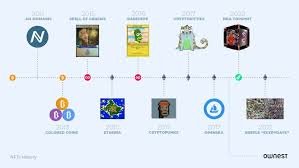
What Happened to NFTs? The Full Timeline From Boom to Bust to Now

In March 2021, Beeple sold a digital collage for $69.3 million at Christie’s. Two years later, a report claimed 95% of NFTs had zero monetary value. By 2026, the market had quietly rebuilt itself around utility instead of hype.

What happened to NFTs isn’t a simple rise-and-fall story. It’s a cycle of explosive growth, reckless speculation, inevitable collapse, and slow recovery around fundamentally different use cases.

2021: The Boom

Everything converged at once. Crypto prices were surging. Stimulus checks flooded retail markets. Pandemic boredom pushed millions toward online speculation. And NFTs gave people something to buy that felt exciting, new, and culturally relevant.

NFT trading volume hit $17 billion in 2021, up from $82 million the year before – a 20,000% increase. Beeple’s Everydays sold at Christie’s for $69.3 million. Pak’s The Merge sold for $91.8 million across 28,893 buyers. OpenSea reached a $1.4 billion market cap. Celebrities from Paris Hilton to Jimmy Fallon bought Bored Apes and showed them on national television.

Profile picture NFTs became social currency. Owning a CryptoPunk or a Bored Ape signaled membership in an exclusive digital club. Floor prices for popular collections climbed daily. New collections launched every hour. And almost everyone buying assumed prices would keep going up.

2022: The Crash

Reality arrived fast.

By May 2022, daily NFT sales had dropped 92% from September 2021 peaks. Active wallets interacting with NFT contracts fell 88% from November 2021. The crypto market itself crashed – Bitcoin fell from $69,000 to under $16,000, dragging everything with it.

Terra/Luna collapsed in May 2022, erasing $40 billion and destroying confidence in the broader crypto ecosystem. FTX imploded in November 2022, further poisoning sentiment.

NFT-specific problems compounded the macro damage. Wash trading – sellers trading with themselves to fake demand – was exposed as widespread. Projects that promised metaverse games and utility tokens delivered nothing. Rug pulls became so common that 98% of tokens launched on Pump.fun showed signs of being scams.

One bright spot: Ethereum completed its merge to proof-of-stake on September 15, 2022, reducing energy consumption by approximately 99.95% and largely neutralizing the environmental criticism.

In December 2022, Bitcoin Ordinals were introduced, bringing NFTs to the Bitcoin blockchain for the first time.

2023: The Cold Reality

The September 2023 dappGambl report landed like a bomb: 95% of NFTs had zero monetary value. Of over 73,000 collections analyzed, 79% remained unsold. The average NFT collection was worth $0.

OpenSea, which had processed billions in volume at its peak, saw monthly trading plummet. The company laid off staff and struggled to compete with Blur, a new marketplace that attracted serious traders with lower fees and token incentives.

Bill Gates had called NFTs “100% based on greater fool theory” in June 2022. By 2023, that assessment felt prophetic for the vast majority of collections.

But amid the wreckage, something interesting happened. The projects that survived weren’t the ones with the flashiest marketing – they were the ones with genuine scarcity, historical significance, or real utility.

2024: Consolidation

The NFT market bottomed and began stabilizing.

CryptoPunk #7804 resold for $16.4 million in September 2024. CryptoPunk #3100 sold for $16.0 million in March 2024. Blue-chip NFTs proved they could hold value even in a bear market.

OpenSea and Magic Eden pivoted, expanding into fungible token trading to diversify revenue. Blur captured 38% of Ethereum NFT volume. The marketplace landscape consolidated around fewer, stronger players.

Enterprise NFT adoption accelerated quietly. Starbucks Odyssey enrolled 2 million+ members. Nike generated significant revenue through its .SWOOSH NFT platform. These weren’t speculative art projects – they were customer engagement tools using blockchain infrastructure.

2025-2026: The Rebuild

Total NFT transaction volume in 2025 was $5.5 billion – down 37% from 2024 but sustained by fundamentally different drivers than the 2021 boom.

By early 2026, active NFT participation grew 80% year-over-year. The NFT market gained $220 million in value in January 2026 alone. But the composition was unrecognizable from five years earlier:

  • NFT ticketing captured 5.3% of major US venue ticket sales
  • Identity NFTs surpassed 12 million issued
  • 40%+ of Fortune 500 companies used NFTs operationally
  • Telegram NFT gifts became a surprise growth vertical
  • Social NFTs on TON blockchain expanded Telegram’s crypto ecosystem

The total market cap sits around $2.6 billion – a fraction of the peak but far more grounded in actual usage.

Why It Happened

What happened to NFTs follows the classic technology hype cycle almost perfectly:

Innovation trigger (2017-2020): CryptoPunks, CryptoKitties, and ERC-721 established the technical foundation.

Peak of inflated expectations (2021): $17 billion in volume. Celebrity endorsements. “$69 million JPEG” headlines.

Trough of disillusionment (2022-2023): 95% worthless. Rug pulls. Wash trading exposed. Public ridicule.

Slope of enlightenment (2024-2025): Blue chips held value. Enterprise adoption grew. Utility use cases emerged.

Plateau of productivity (2026): NFTs function as infrastructure – ticketing, identity, loyalty, provenance – rather than speculative art vehicles.

The technology never failed. The speculation around it did.

FAQ

Are NFTs coming back?

NFTs never technically left – they just transformed. Speculative art trading collapsed, but utility-based NFTs (tickets, memberships, identity tokens) and blue-chip collectibles continue growing. Active participation increased 80% year-over-year in early 2026.

Who lost money on NFTs?

The vast majority of buyers who purchased during the 2021-2022 boom. With 95% of NFTs reaching zero value by 2023, losses were widespread – particularly among retail investors who entered during peak hype without understanding the risks.

What is the most expensive NFT ever sold?

Pak’s The Merge at $91.8 million (December 2021), followed by Beeple’s Everydays at $69.3 million (March 2021).

Are NFTs Still a Thing in 2026? What Actually Survived the Crash

Short answer – yes, NFTs are still a thing. But they look nothing like what most people remember.

The speculative art market that turned pixelated apes into million-dollar status symbols has largely collapsed. The cumulative NFT market cap dropped roughly 99% from its 2023 peak of $184 billion to around $2.6 billion by early 2026. Daily trading volumes that once reached hundreds of millions now hover in the low millions on a good day.

But “still a thing” doesn’t mean “the same thing.” The NFT space in 2026 has quietly evolved into something far more practical – and far less flashy – than the JPEG speculation of 2021.

What Died

The profile picture (PFP) gold rush is over. 95% of NFTs minted during the boom had zero monetary value by September 2023. Collections that launched with ambitious roadmaps – metaverse integration, token airdrops, celebrity partnerships – mostly delivered nothing. The projects that promised “community” delivered Discord servers that went silent within months.

Wash trading, where sellers traded with themselves to inflate prices, accounted for a significant percentage of reported volume during the peak. Once that artificial activity dried up, real demand was far smaller than the numbers suggested.

The environmental backlash also left a mark. Before Ethereum’s September 2022 merge to proof-of-stake, the energy consumption argument was legitimate and damaging to public perception.

Celebrity NFT projects were particularly brutal. Endorsements from athletes, musicians, and influencers attracted retail buyers who often had no understanding of what they were purchasing. When those projects collapsed, trust eroded across the entire space.

What Survived

CryptoPunks and top-tier blue chips. The rarest CryptoPunks – specifically Alien and Ape types – continued trading at multi-million dollar prices through 2024. CryptoPunk #7804 resold for $16.4 million in September 2024. Scarcity and historical significance created a floor that speculation-driven projects never had.

NFT ticketing. Event tickets issued as NFTs now capture 5.3% of ticket sales across major US venues. Built-in fraud prevention, programmable resale rules, and provable authenticity solve real problems that paper and QR-code tickets can’t.

Identity and membership tokens. Over 12 million identity NFTs were issued by early 2026. These function as decentralized IDs, loyalty cards, and membership passes – value derived from utility, not speculation.

Enterprise adoption. Over 40% of Fortune 500 companies now use NFTs in some operational capacity – supply chain tracking, digital credentials, customer loyalty programs, and internal documentation. This isn’t hype. It’s infrastructure.

Creator royalties. Artists who built genuine followings still sell NFTs with 5-10% royalties on every resale programmed into smart contracts. The royalty mechanism remains one of the most revolutionary features for independent creators.

Telegram NFT gifts emerged as a surprising growth area in late 2025, with collectible gifts selling for hundreds of thousands of dollars and granting real platform benefits like lifetime Premium access.

The Numbers in 2026

The market isn’t dead – it’s smaller, more focused, and driven by different fundamentals:

  • Total NFT market cap: ~$2.6 billion
  • Total NFT transaction volume (2025): $5.5 billion, down 37% from 2024
  • Active participation growth: 80% year-over-year increase in early 2026
  • Ethereum’s share of NFT contracts: ~62%
  • Solana’s share: ~18%
  • Fortune 500 NFT adoption: 40%+

The gap between “total market value” (shrinking) and “active participation” (growing) tells the real story. Fewer dollars are chasing speculation. More people are using NFTs for practical purposes.

Who’s Still Buying NFTs?

The buyer profile has shifted dramatically.

Collectors focused on historically significant pieces – CryptoPunks, Art Blocks, early Beeple works – treat NFTs like fine art. They buy for long-term holding, not quick flips.

Gamers interact with NFTs through in-game items, skins, and virtual land. Most don’t even think of them as “NFTs” – they’re just digital items they can trade outside the game.

Brands and enterprises use NFTs for loyalty programs (Starbucks Odyssey enrolled over 2 million members), event access, and supply chain verification.

Musicians and artists who built direct collector relationships continue selling consistently. The ones who treated NFTs as a distribution channel – not a lottery ticket – are the ones still here.

So Are NFTs Still a Thing?

NFTs are still a thing the way the internet was still a thing after the dot-com crash. The speculative excess burned off. The underlying technology kept building. The use cases that survived are the ones that solve real problems – ownership verification, creator compensation, fraud-resistant ticketing, and programmable digital assets.

If you’re asking whether you can still flip a JPEG for 100x overnight – no, that era ended in 2022.

If you’re asking whether non-fungible tokens as a technology have a future – the answer is built into every event ticket, loyalty program, and creator royalty payment processing on a blockchain right now.

The hype died. The infrastructure didn’t.

FAQ

Are NFTs still worth buying?

It depends entirely on what you’re buying and why. Speculative art NFTs carry extreme risk – most have lost 90%+ of their value. Utility-based NFTs (tickets, memberships, loyalty tokens) derive value from what they do, not market speculation. Blue-chip collections like CryptoPunks have held value better than anything else in the space.

Did NFTs crash?

Yes. The NFT market crashed dramatically between 2022-2023. Daily sales fell 92% from September 2021 peaks. The cumulative market cap dropped 99% from $184 billion to under $3 billion. However, trading activity and active participation began recovering in late 2025 and early 2026.

What is the NFT market cap in 2026?

Approximately $2.6 billion as of early 2026. This represents a fraction of the peak but reflects a market built on actual utility rather than speculative mania.

Coyyn.com Business: What It Actually Offers Freelancers, Startups, and Enterprises in 2026

Traditional banks move slowly. Crypto platforms confuse half their users. Freelancers juggle five different apps to get paid, convert currencies, track expenses, and file taxes. Startups burn hours on payroll spreadsheets when they should be building products.

Coyyn.com business is trying to fix all of that at once.

The platform positions itself as a full-stack digital finance ecosystem – blending traditional banking, cryptocurrency tools, smart contract automation, and gig economy features into a single interface. One login. One dashboard. Fiat and crypto side by side.

That’s the pitch. But there’s a gap between marketing language and real-world functionality, and the top 10 search results for this keyword tell two very different stories depending on who’s writing. Some treat Coyyn.com business as a finished fintech product. Others – including one of the more careful analyses from Startup Editor – point out that much of the public positioning is still informational and educational rather than a clearly documented regulated financial platform.

Here’s what the evidence actually supports.

What Coyyn.com Business Does

At its core, coyyn.com business is a digital finance platform designed for people who operate across both fiat and crypto worlds. It targets three audiences: freelancers managing multiple income streams, startups needing scalable financial tools, and enterprises looking for blockchain-powered automation.

The platform integrates several layers:

A unified wallet that holds both traditional currencies (USD, EUR, GBP, and 15+ fiat currencies total) and cryptocurrencies (45+ digital assets including Bitcoin and Ethereum). Users convert between them internally – no need to shuttle funds to a separate exchange.

Business management tools – automated invoicing with payment reminders, payroll processing in either crypto or fiat, expense tracking with AI-powered categorization, and analytics dashboards that show revenue and cost trends over time.

Smart contract functionality – self-executing agreements that release payment automatically when predefined conditions are met. A freelancer delivers a project, the client confirms, and funds release instantly. No chasing. No awkward follow-up emails.

DeFi integration – decentralized finance features including decentralized wallets, liquidity pools for passive yield, and blockchain-based lending. The platform applies DeFi concepts to offer direct, instant payments without traditional banking intermediaries.

Cross-border payments to 150+ countries with fees ranging from 0.5% to 2.1% – significantly below the $25-50+ per transaction that legacy wire transfers typically cost.

This combination of features places coyyn.com business in an unusual category. It’s not purely a bank. Not purely an exchange. Not purely a business SaaS tool. It’s an attempt to consolidate all three – which is either its greatest strength or its biggest complexity problem, depending on who you ask.

Freelancer and Gig Economy Features

Roughly 23% of Coyyn.com’s user base are freelancers and gig workers, and the platform invests heavily in this segment. The tools reflect real pain points that freelancers deal with daily.

Instant payments. When a client pays, funds are available immediately – not in 3-5 business days. For freelancers managing cash flow across multiple projects, eliminating banking delays is a fundamental upgrade. The platform processes transactions using blockchain rails, which means settlements happen in seconds rather than business days.

Hour logging and milestone tracking. A built-in timer tracks work hours per project. Clients approve logged time before funds release, protecting both sides. Disputes get handled through built-in chat with evidence uploads – no need for external mediation platforms.

Multi-currency flexibility. A designer in Lisbon working for a client in Toronto can receive payment in ETH, convert to EUR within the same dashboard, and have the transaction auto-logged for tax reporting. All without leaving the platform.

Profile and matching. Freelancers build public profiles listing skills, past projects, and client ratings. The platform matches them with potential clients based on needs – functioning as a lightweight marketplace on top of the financial infrastructure.

Quick withdrawals. Choose to keep funds in traditional currency, move some to crypto, or withdraw directly. The platform shows current exchange rates and fees before confirming any conversion – transparency that many competing platforms skip.

Tax tracking. Automated expense categorization and income tracking generate reports ready for tax preparation. For gig workers juggling multiple clients across currencies, this alone could justify the platform. Freelancers working with digital assets like NFTs should also track broader market trends – resources like NFT drop calendars can help identify new opportunities alongside platforms like Coyyn.

The gig economy tools address a genuine market gap. Traditional banks weren’t designed for people with irregular income from multiple international clients. They assume a single employer, regular pay dates, and domestic transactions. Coyyn.com business is built specifically for the opposite reality.

Startup and SME Tools

Startups face a different set of problems – and Coyyn.com business targets them with enterprise-grade features packaged at startup-friendly pricing.

Automated invoicing. Create professional, brandable invoices directly from the dashboard. Each invoice includes a direct payment link where clients can pay via credit card, bank transfer, or crypto. When a client pays, the system auto-matches funds to the invoice and marks it as “Paid” – eliminating hours of manual reconciliation.

Overdue reminders. Set up automated, polite follow-ups for late payments. Cash flow stays healthy without the awkward conversations that kill business relationships.

Payroll management. Pay employees and contractors in either crypto or fiat – their choice. For remote teams spanning multiple countries, this flexibility removes the friction of managing separate payroll systems per jurisdiction.

Team collaboration and role management. Managers assign roles – who approves purchases, who views reports, who processes payments. Real-time updates show when payments clear, keeping the entire finance team synchronized.

Analytics dashboards. Track sales trends, rising expenses, unusual activity, and project-based costs from a single screen. Custom alerts notify about low balances or anomalies before they become problems.

Expense tracking with AI. The mobile app lets users snap photos of physical receipts. Coyyn’s AI extracts the vendor, date, and amount automatically. Expenses are categorized and logged without manual data entry.

For SaaS companies, the platform provides tools to manage subscription-based revenue models. Automated billing reduces manual effort. Integration with existing platforms ensures smooth operations. For e-commerce merchants, multi-currency payment acceptance with lower processing fees than traditional payment gateways makes selling internationally more profitable.

The SME pitch comes down to consolidation. Instead of paying separately for QuickBooks (invoicing), Wise (international transfers), Coinbase (crypto), and Gusto (payroll), coyyn.com business argues you can do it all in one place with lower aggregate fees and less operational friction.

Smart Contracts and DeFi Integration

Smart contracts are where coyyn.com business moves beyond standard fintech territory into blockchain-native functionality.

Trustless agreements ensure that freelancers receive guaranteed payment when work is delivered, while the business is guaranteed that funds aren’t released until quality is verified. Conditions are programmed upfront. Execution is automatic. No intermediary decides whether to release payment – the code handles it.

For businesses, this means fewer disputes, faster settlement, and lower administrative overhead. For freelancers, it means certainty – if the contract conditions are met, payment happens. Period.

The DeFi layer goes further:

Decentralized wallets give users direct control over their private keys. Unlike fully custodial solutions where the platform holds your keys, Coyyn’s wallet architecture means you maintain financial sovereignty over your assets.

Liquidity pools allow users to stake assets and earn a share of transaction fees – a modernized version of a savings account where your capital actively works rather than sitting idle.

Blockchain-based lending opens access to capital without traditional credit checks and banking bureaucracy.

The tradeoff is clear: DeFi features introduce complexity. Users comfortable with decentralized wallets and smart contracts gain significant advantages. Newcomers may find the learning curve steep – though the platform provides educational resources to bridge that gap.

Security Architecture

When a platform handles both fiat and crypto, security becomes non-negotiable. Coyyn.com business implements several layers:

Encryption. AES-256 encryption for data at rest and in transit – the same standard used by military and banking institutions. Some sources reference 128-bit encryption for specific transaction types, though AES-256 appears to be the primary standard.

Cold storage. 95% of cryptocurrency holdings are stored offline in cold wallets with multi-signature protection. Only operational funds needed for active transactions sit in hot wallets.

Authentication. Multi-factor authentication is mandatory. The mobile app supports biometric login – fingerprint and Face ID. Each user receives encrypted wallet access with unique keys.

Compliance. The platform reports SOC 2 Type II certification and GDPR compliance. KYC (Know Your Customer) and AML (Anti-Money Laundering) procedures are in place. Built-in compliance tools help businesses stay current with financial regulations through automated reports and audit trails.

Scalability. The infrastructure handles high transaction volumes without lag – critical for businesses processing hundreds or thousands of payments during peak periods.

What’s absent. Deposits are not FDIC insured. This is standard for crypto-adjacent platforms but means your funds don’t carry government-backed protection. For significant holdings, distributing across multiple platforms remains the prudent strategy.

Pricing and Cost Structure

Coyyn.com business uses a flexible, tiered pricing model designed to scale from solo freelancers to enterprises:

Free tier. Access to basic tools, educational content, and platform exploration. Good for testing whether the platform fits your workflow before committing.

Paid plans. Advanced features – analytics dashboards, automation tools, crypto integrations, and business-grade reporting – require a subscription. Business accounts range from $15 to $45/month depending on tier and feature access.

Transaction costs. Crypto trading fees sit at 0.15-0.25% per trade. Cross-border transfers cost 0.5-2.1% depending on corridor. Domestic transfers above $100 are free. Smart contract execution costs vary based on blockchain congestion.

Where Coyyn undercuts competitors. Traditional merchant processing fees run 2.5-3.5%. Coyyn.com business claims to reduce these to near-zero through blockchain-based settlement – with some sources citing fees as low as 0.1% for certain transaction types. International transfers run 35-60% cheaper than legacy bank wires.

Where to watch for hidden costs. Crypto conversion spreads of 0.2-0.5% during volatile periods can add up. Inactivity fees may apply after 12 months. Several independent reviewers note that exact fee schedules aren’t always clearly published without creating an account – a transparency gap worth noting.

Who Coyyn.com Business Is Built For

The user base breaks down along predictable lines:

Freelancers and gig workers (~23% of users). The combination of instant international payments, multi-income tracking, hour logging, and automated tax reporting addresses pain points that traditional banks simply ignore.

Crypto traders (~28%). The integrated approach appeals to people who want trading, storage, and fiat conversion in one place rather than shuffling between a bank account, an exchange, and a separate wallet.

Small business owners. Payment processing, invoicing, payroll, and analytics under one roof. E-commerce merchants benefit particularly from multi-currency payment acceptance.

International remittance users (~17%). Competitive cross-border fees and fast processing attract people who regularly send money across borders.

Digital nomads and remote workers. People who need financial infrastructure that works across countries, currencies, and asset types without legacy banking friction.

SaaS companies. Subscription billing automation, revenue tracking, and scalable infrastructure suit recurring-revenue business models.

What Independent Reviews Actually Say

Startup Editor offers the most measured take: coyyn.com business is best understood as “an informational business-and-finance resource” with product-style descriptions that aren’t always consistent with what’s publicly verifiable. They recommend treating educational content as valuable but verifying operational or financial-service claims independently before making real business decisions.

TycoonStory notes the platform combines cryptocurrency, automation, and data-driven tools, but flags that crypto price volatility can impact financial stability and regulatory uncertainty varies across countries.

RankVisely and TopSEOTools provide generally positive overviews but focus more on feature descriptions than independent verification.

Multiple domains exist around the Coyyn brand – businesscoyyn.com, cooyyn.com, coyyyn.com, coyyn.us, coyyn.news – with varying levels of apparent affiliation. Always verify you’re on the official site before entering any financial information.

The honest synthesis: coyyn.com business offers a genuinely ambitious feature set that addresses real gaps in how freelancers, startups, and digital businesses manage money. The consolidation value proposition – fewer apps, fewer fees, one interface – is compelling. But the platform is younger than established competitors, independent verification of all claimed features is limited, and the regulatory framework for crypto-adjacent financial platforms continues to evolve.

Start small. Test with amounts you’re comfortable experimenting with. Use the free tier to evaluate whether the tools fit your workflow before committing to paid plans or significant deposits. Maintain diversified financial relationships. And do your own due diligence – which is advice that applies to every financial platform, not just this one.

FAQ

What is coyyn.com business?

Coyyn.com business is a digital finance platform that combines traditional banking, cryptocurrency services, smart contract automation, and gig economy tools in a single interface. It targets freelancers, startups, and enterprises who need to manage both fiat and crypto assets, process cross-border payments, automate invoicing and payroll, and access DeFi features – all from one dashboard.

How much does coyyn.com business cost?

The platform offers a free tier for basic tools and exploration. Paid business plans range from $15 to $45/month. Crypto trading fees are 0.15-0.25% per transaction. International transfers cost 0.5-2.1%. Domestic transfers above $100 are free. Some transaction types may incur near-zero fees through blockchain settlement.

Is coyyn.com business safe?

The platform implements AES-256 encryption, stores 95% of crypto in cold wallets with multi-signature protection, requires mandatory multi-factor authentication, and reports SOC 2 Type II certification and GDPR compliance. However, deposits are not FDIC insured, which means funds don’t carry government-backed protection. For significant amounts, diversifying across multiple platforms is the prudent approach.

Who should use coyyn.com business?

The platform is best suited for freelancers receiving international payments from multiple clients, startups needing scalable finance tools, e-commerce merchants accepting multi-currency payments, remote teams managing cross-border payroll, and crypto-savvy businesses looking to integrate DeFi into operations. It’s less suitable for users who need a traditional bank with FDIC insurance, physical branches, or long-established regulatory track records.

How does coyyn.com business compare to traditional banking?

Coyyn.com business processes international transfers 35-60% cheaper and significantly faster than traditional banks. It offers crypto integration, smart contracts, and freelancer tools that banks don’t provide. Traditional banks offer FDIC-insured deposits, decades of regulatory history, established dispute resolution, and broader acceptance for mortgages and credit applications. Most independent reviewers recommend using Coyyn as a complement to – not a complete replacement for – traditional banking relationships.

Can coyyn.com business handle enterprise-level operations?

The platform includes features designed for larger organizations: team role management, high-volume transaction processing, API integrations with existing business platforms, compliance and audit tools, and analytics dashboards for multi-project financial oversight. Enterprise-grade smart contracts automate recurring payments and vendor agreements. However, enterprises should independently verify regulatory compliance requirements for their specific jurisdictions before committing to any crypto-adjacent platform.

Treasure NFT: What It Promised, How It Collapsed, and What Investors Lost

Treasure NFT promised daily returns of 4.3% to 6.8% and monthly profits of up to 30% through AI-driven NFT trading. Tens of thousands of people across South Asia believed it. By March 2025, the platform froze withdrawals, went silent, and left an estimated 100,000+ investors in Pakistan alone unable to access their money.

Every major crypto publication that has investigated the platform – KuCoin, CoinDCX, CoinSwitch, Gate.io, Mudrex, Bitrue, and Flitpay – reached the same conclusion: Treasure NFT operated as a Ponzi scheme disguised as an NFT marketplace.

Here’s a fact-based breakdown of what Treasure NFT actually was, how the scheme worked, who got hurt, and what happened after the collapse.


What Was Treasure NFT?

Treasure NFT marketed itself as “the world’s first encrypted NFT integrated marketplace based on algorithmic trading.” The platform claimed to use artificial intelligence to identify undervalued NFTs, trade them automatically, and distribute profits to users who deposited funds.

Unlike legitimate NFT marketplaces like OpenSea, Blur, or Magic Eden – where users buy and sell specific digital assets directly – or NFT drop calendars that help collectors discover verified upcoming projects, Treasure NFT operated as a closed-loop system. Users deposited money, and the platform claimed to handle all trading internally. Users never interacted with actual NFTs. They saw numbers on a dashboard.

The platform launched around 2022 and grew rapidly through 2023 and 2024, primarily in India, Pakistan, and Bangladesh. It positioned itself as a way for everyday people – many with no prior investment experience – to earn passive income from cryptocurrency without needing any trading knowledge.

The core promise: deposit money, let the AI trade for you, and collect guaranteed daily profits. No effort required. No market risk.

That promise was the first and biggest red flag.

How the Treasure NFT Scheme Worked

Financial experts and independent investigators have documented a clear pattern that matches classic Ponzi scheme mechanics.

The Investment Structure

Users deposited funds and were assigned VIP levels. Higher levels required larger deposits and more referrals but promised higher daily returns. The tiered structure incentivized people to invest more money and recruit more participants to unlock better payouts.

Profitability was directly tied to recruitment. The referral program used a multi-level structure – users earned commissions not only from their direct referrals but also from indirect referrals several layers deep. This pyramid-shaped earning model is a defining characteristic of both Ponzi and pyramid schemes.

Where the “Profits” Came From

No independent investigator has found verifiable NFT trading activity associated with Treasure NFT on any public blockchain – not on Etherscan, not on Polygonscan, not on Solscan. The AI-driven trading that supposedly generated profits was completely undocumented. No smart contract audits existed. No on-chain transaction data supported the platform’s claims.

The math tells the story: 4.3-6.8% daily returns means doubling your money roughly every 10-16 days. No legitimate investment in any asset class – stocks, bonds, real estate, crypto, NFTs – can sustain those returns. The only way to pay such returns is to use deposits from new investors to pay existing ones. That is the legal definition of a Ponzi scheme.

The Trust-Building Phase

Early users received their payouts. This was deliberate. Small, timely withdrawals built trust and encouraged users to reinvest their profits and recommend the platform to others. People who received their first withdrawal became the most convincing recruiters – they could show bank statements proving Treasure NFT “worked.”

This is a textbook Ponzi tactic: pay early, collect trust, then scale.

The Collapse: March 2025

The system began unraveling in late 2024 as growth slowed. By early 2025, complaints about delayed withdrawals surged across social media, Reddit, and review platforms.

On March 23, 2025, Treasure NFT effectively froze withdrawals. The platform initially cited “financial system adjustments” and extended withdrawal processing times from 96 hours to 168 hours. That 168-hour window came and went. Users then saw timers extended to 360 hours. Then indefinitely.

Treasure NFT’s own official X account published withdrawal data showing that of 1,887 withdrawal forms submitted, only 121 were successfully processed. The rest were rejected on technicalities, left pending, or met with “Unqualified Conditions” errors.

The platform’s Telegram channel – which had over 419,000 subscribers – went silent after March 30, 2025. The website was flagged as unsafe by major browsers. Customer support became unreachable.

The Express Tribune reported the story as a major financial fraud affecting Pakistani investors. Reports from India suggested that billions of rupees had been collected from users.

Who Was Behind Treasure NFT?

The platform publicly named its CEO as “Steven Alexander” and its CTO as “Bob Steven.” Independent investigators found that neither individual has a verifiable professional history in blockchain, fintech, or any related industry. Their LinkedIn profiles contained no real work history, no professional connections, and no verifiable academic background.

The claimed headquarters was in Tempe, Arizona, with a stated Money Services Business (MSB) license from FinCEN. Investigation revealed that the registered Arizona address corresponds to a Russian music academy – not any legitimate NFT business.

An MSB license from FinCEN only ensures anti-money laundering compliance – it does not certify that a business is legitimate, solvent, or operating honestly. Multiple sources confirm that Treasure NFT was not registered with India’s Financial Intelligence Unit (FIU-IND), leaving Indian investors without regulatory protection.

Trustpilot reviews identify a person named “Moh Bilal Kahlon” as an alleged operator, though this has not been independently confirmed by law enforcement.

Who Got Hurt

Treasure NFT’s recruitment campaigns specifically targeted economically disadvantaged communities. The platform’s marketing – spread through WhatsApp groups, YouTube videos, and local influencers – was particularly aggressive in Pakistan’s tribal areas, Balochistan, Sindh, and rural India.

The human impact extended far beyond financial loss:

  • Laborers in Larkana, Pakistan reportedly quit their jobs to rely on Treasure NFT’s daily profits
  • Recruitment often happened through family and friends, destroying relationships when the scheme collapsed
  • Users who promoted the platform to their communities faced social consequences alongside financial ones
  • Many investors were first-time participants in any investment, drawn in by the promise that no experience was needed
  • Reports on Trustpilot describe users losing $120 to several thousand dollars – amounts that represent significant portions of household income in the affected regions

On Trustpilot, Treasure NFT holds a 1-star rating with reviews describing it as “the biggest scam in 2025” and alleging total losses in the billions of dollars across India, Pakistan, and Bangladesh.

The Rebrand: NFT Gold and Treasure Fun

After the collapse, Treasure NFT did not simply disappear. It rebranded.

The platform launched a successor called “NFT Gold” and redirected users to “Treasure Fun” (treasurefun.xyz). Treasure Fun’s website promotes “AI-powered algorithmic trading” with a “dual earnings mechanism” – language nearly identical to Treasure NFT’s original marketing.

Multiple sources – KuCoin, CoinSwitch, Bitrue, and Gate.io – warn that NFT Gold and Treasure Fun appear to be the same operation under new names. This rebrand-and-relaunch cycle is a documented pattern in crypto fraud: once exposed, scam operators shut down, rebrand, and target a fresh batch of users.

Trustpilot reviews explicitly state: “Treasure NFT, Treasure Fun, and Nova NFT are the same company.” Users report that transitioning from Treasure NFT to Treasure Fun required additional deposits – a further extraction of funds from victims already unable to withdraw.

Red Flags That Identified the Scam

For anyone evaluating a new NFT or crypto platform, Treasure NFT’s red flags are a textbook checklist of what to watch for:

Guaranteed high returns. No legitimate platform promises 4.3-6.8% daily. NFT markets are volatile – prices swing based on demand, and most NFTs lose value over time. Fixed daily profits are mathematically impossible without new investor money.

Referral-driven revenue. When a platform’s primary growth mechanism is recruiting new members rather than actual trading or product sales, it’s a pyramid structure. Treasure NFT’s multi-level referral commissions were the engine of the entire operation.

Anonymous or unverifiable team. “Steven Alexander” and “Bob Steven” had no traceable professional history. The Arizona address was fake. No real people stood behind the platform.

No on-chain activity. A blockchain-based platform should have verifiable transactions on public explorers. Treasure NFT had none. The claimed AI trading was completely opaque. Trusted NFT aggregators like nftdroops.com specifically filter out projects that lack transparent on-chain data – a basic check Treasure NFT would have failed instantly.

Withdrawal restrictions. Legitimate exchanges process withdrawals within minutes or hours. Treasure NFT’s escalating delays – 96 hours to 168 hours to 360 hours to infinity – followed the classic Ponzi endgame pattern.

Targeting vulnerable populations. Ethical financial products don’t need to recruit through WhatsApp chains in rural communities with limited financial literacy. Deliberate targeting of vulnerable groups is both a moral failure and a fraud indicator.

No regulatory registration. Not registered with FIU-IND. Not audited. No published financial statements. The FinCEN MSB license was a compliance checkbox, not proof of legitimacy.

What Affected Users Can Do

If you lost money to Treasure NFT, options are limited but not zero.

Document everything. Save screenshots of transactions, wallet addresses, deposit confirmations, chat logs with support, and referral communications. This evidence matters if law enforcement pursues action.

Report to authorities. In India, file complaints with local police cybercrime cells and through the National Cybercrime Reporting Portal (cybercrime.gov.in). In Pakistan, report to the Federal Investigation Agency (FIA) cybercrime wing. Multiple reports increase the likelihood of investigation.

Do not invest in Treasure Fun, NFT Gold, or any successor platform. These appear to be the same operation under new branding, designed to extract additional funds from the same victim pool.

Seek legal advice. In India, gains from Virtual Digital Assets carry a 30% flat tax and 1% TDS – but losses from fraudulent platforms may not be tax-deductible. A tax professional can clarify your specific situation.

Be cautious with “recovery” services. Scam recovery services that promise to get your money back – often for an upfront fee – are frequently scams themselves.

How to Spot Legitimate NFT Platforms

Treasure NFT exploited the complexity and novelty of NFTs to disguise a simple fraud. Legitimate NFT platforms look fundamentally different:

OpenSea, Blur, Magic Eden, and Rarible are peer-to-peer marketplaces where users buy and sell specific digital assets at market-determined prices. No guaranteed returns exist. Prices fluctuate based on supply, demand, and speculation.

Legitimate platforms have verifiable on-chain activity. Every NFT transaction on OpenSea is visible on Etherscan. Every trade on Magic Eden shows on Solscan. Transparency is not optional – it’s built into how blockchains work.

Legitimate platforms don’t need referral pyramids to grow. OpenSea became the largest NFT marketplace through organic adoption, not multi-level recruitment incentives. Independent platforms like NFTdroops curate upcoming drops by filtering out scam projects and highlighting verified collections – the exact opposite of Treasure NFT’s approach.

Legitimate platforms identify their teams. The founders of OpenSea, Magic Eden, and Blur are publicly known, with verifiable professional backgrounds and histories.

Any platform that promises guaranteed returns from NFT trading without transparent on-chain activity and identifiable leadership should be treated as fraudulent until proven otherwise. For anyone still interested in NFTs after this experience, start with verified NFT drops from trusted calendars rather than platforms that promise passive income.

FAQ

Is Treasure NFT a scam?

Yes. Every independent review – from KuCoin, CoinDCX, CoinSwitch, Gate.io, Mudrex, Bitrue, and Flitpay – identifies Treasure NFT as a Ponzi scheme. The platform promised unsustainable daily returns of 4.3-6.8%, relied on referral recruitment for revenue, had no verifiable on-chain trading activity, used fake founder identities, and froze withdrawals in March 2025 before going silent.

What happened to Treasure NFT?

Treasure NFT froze withdrawals on approximately March 23, 2025. The platform’s Telegram channel (419,000+ subscribers) went silent on March 30, 2025. The website was flagged as unsafe by browsers. The operation then rebranded as “Treasure Fun” and “NFT Gold”, which experts warn are the same scheme under new names.

Can I still withdraw money from Treasure NFT?

Almost certainly not. As of early 2026, KuCoin reports that withdrawals are largely disabled or failing. Treasure NFT’s own data showed that of 1,887 withdrawal requests, only 121 were processed. Users should not deposit additional funds in attempts to unlock withdrawals – this is a common tactic to extract more money from victims.

Is Treasure Fun the same as Treasure NFT?

Multiple sources confirm they appear to be the same operation. Trustpilot reviews, KuCoin, CoinSwitch, and Bitrue all identify Treasure Fun (treasurefun.xyz) and NFT Gold as rebranded continuations of Treasure NFT. The marketing language, claimed AI-trading model, and revenue structure are nearly identical.

How many people did Treasure NFT affect?

Exact numbers are difficult to confirm, but The Express Tribune reports over 100,000 investors affected in Pakistan alone. The scheme was also active in India and Bangladesh. Trustpilot reviews allege total losses in the billions of rupees. The platform’s Telegram channel had over 419,000 subscribers at its peak.

How do I report Treasure NFT fraud?

In India, file complaints through the National Cybercrime Reporting Portal (cybercrime.gov.in) and local police cybercrime cells. In Pakistan, report to the FIA Cybercrime Wing. Document all transactions, screenshots, and communications before filing. Multiple reports from different victims strengthen the case for investigation.

Coyyn.com: Digital Finance Platform Bridging Crypto and Traditional Banking

The line between traditional banking and cryptocurrency keeps getting thinner. Major banks explore blockchain settlement. PayPal launched its own stablecoin. And a growing number of platforms are betting that the future belongs to whoever can merge both worlds into a single interface.

Coyyn.com is one of those platforms. It positions itself as a full-stack digital finance ecosystem – combining fiat banking, cryptocurrency services, payment processing, and business tools under one roof. The pitch is straightforward: stop juggling four different apps for banking, crypto, invoicing, and cross-border transfers. Do it all in one place, with lower fees and faster settlement.

But does it actually deliver? Here’s a detailed look at what Coyyn.com offers, who it’s built for, how the technology works, and what to consider before trusting it with your money.


What Is Coyyn.com?

Coyyn.com is a fintech platform designed to unify digital banking and cryptocurrency services into a single ecosystem. Rather than functioning purely as a crypto exchange or purely as a neobank, it occupies the middle ground – letting users hold fiat currencies and cryptocurrencies in one wallet, convert between them, send payments domestically and internationally, and access business-grade financial tools.

The platform supports over 45 cryptocurrencies (including Bitcoin and Ethereum) alongside 15+ fiat currencies (USD, EUR, GBP, and others). This dual-asset approach makes Coyyn.com relevant to a broader user base than single-purpose crypto wallets or traditional bank accounts.

At its core, Coyyn.com integrates three technology layers: blockchain infrastructure for transaction transparency and speed, AI-driven analytics for fraud detection and financial insights, and cloud computing for scalability. The combination targets a specific gap in the market – people and businesses that operate across both crypto and fiat worlds and are tired of managing separate tools for each.


Core Features of Coyyn.com

Unified Digital Wallet

The centerpiece of Coyyn.com is a multi-currency digital wallet that holds both fiat and crypto assets in one interface. Users can store Bitcoin, Ethereum, stablecoins, and other supported digital assets alongside traditional currencies – all accessible from a single dashboard.

This eliminates the need for separate crypto wallets and bank accounts. A freelancer receiving payment in ETH can convert it to USD within the same wallet and transfer it to a linked bank account – or keep it in crypto. A business paying international contractors can choose whichever currency or asset minimizes fees for that specific transaction.

The wallet includes built-in exchange functionality, so conversions happen internally without routing funds to external platforms. Rates are competitive, though spreads of 0.2-0.5% may apply during periods of high volatility.

Crypto Services

Coyyn.com supports trading, storing, and converting across 45+ digital assets. The trading interface handles spot transactions at fees ranging from 0.15% to 0.25% per trade – competitive with major exchanges but not the cheapest available.

Security follows industry best practices: 95% of crypto holdings are kept in cold storage with multi-signature protection. Hot wallets handle only the funds needed for active transactions. Each user receives encrypted wallet access with unique keys. The platform monitors for suspicious activity and sends alerts when anomalies are detected.

For merchants, Coyyn.com offers crypto payment acceptance. Businesses can receive payments in any supported cryptocurrency and automatically convert them to fiat at the point of sale – eliminating volatility risk while still offering customers the option to pay with crypto.

Digital Banking

The Coyyn.com banking app covers the standard functions you’d expect from a modern digital bank – automated bill payments, recurring transfers, mobile check deposits, and real-time balance tracking. The interface uses biometric authentication (fingerprint and Face ID) for security.

Cross-border transfers are one of the platform’s strongest selling points. Coyyn.com processes international payments to 150+ countries with fees ranging from 0.5% to 2.1% – significantly cheaper than traditional wire transfers, which typically run $25-50+ per transaction. Processing times are faster too, with many transfers completing same-day rather than the 3-5 business days common with legacy banks.

Domestic transfers above $100 are free – a meaningful advantage for users who move money frequently between accounts.

Business and Freelancer Tools

This is where Coyyn.com differentiates most aggressively from generic banking or crypto platforms. The business suite includes:

Automated invoicing – create, send, and track invoices with built-in payment reminders. Late payments trigger automatic follow-ups, improving cash flow without manual chasing.

Payroll management – pay employees and contractors in either crypto or fiat, depending on their preference. This flexibility is particularly valuable for remote teams spanning multiple countries.

Tax reporting – automated tracking of income, expenses, and crypto transactions for tax preparation. Freelancers and gig workers dealing with multiple income streams benefit most from this feature.

Smart contracts – self-executing agreements that release payment automatically when predefined conditions are met. A freelancer can set up a smart contract that releases payment upon project delivery confirmation, removing trust friction from client relationships.

Integration APIs – developers can plug Coyyn.com’s payment and wallet services into existing applications, websites, and business platforms.

Expense tracking and analytics – categorized spending reports, custom alerts for unusual activity, and financial dashboards that show trends in revenue and costs over time.


Who Uses Coyyn.com?

The platform’s user base breaks down into several distinct segments.

Freelancers and gig workers account for roughly 23% of users. The combination of instant international payments, multi-income tracking, and automated tax reporting addresses pain points that traditional banks largely ignore. A graphic designer in Portugal receiving payment from a client in Toronto can get paid in ETH, convert to EUR, and have the transaction logged for tax purposes – all within Coyyn.com.

Cryptocurrency traders represent about 28% of the user base. The integrated approach appeals to people who want trading, storage, and fiat conversion in one place rather than shuffling funds between a bank account, a crypto exchange, and a separate wallet.

Small business owners use the platform for payment processing, invoicing, and payroll. E-commerce merchants particularly benefit from multi-currency payment acceptance with lower processing fees than traditional payment gateways.

International remittance users make up roughly 17% of users. Competitive cross-border fees (0.5-2.1%) and fast processing times attract people who regularly send money across borders.

Digital nomads and remote workers are a natural fit – people who need financial infrastructure that works across countries, currencies, and asset types without the friction of traditional banking.


Coyyn.com Fees and Costs

Understanding the real cost of using the platform requires looking at both visible fees and less obvious charges.

Crypto trading fees: 0.15-0.25% per transaction. Competitive with mid-tier exchanges, though high-volume traders can find lower rates on platforms like Binance (0.1%) or Kraken.

International transfers: 0.5-2.1% depending on corridor and currency. This is 35-60% cheaper than traditional bank wire transfers on average, though services like Wise may offer comparable or lower rates on popular corridors.

Domestic transfers: Free above $100.

Business accounts: $15-45/month depending on tier and feature access.

Hidden costs to watch: Spreads of 0.2-0.5% on crypto conversions during volatile periods. Inactivity fees may apply after 12 months of no transactions. Exact fee schedules can be difficult to pin down without an active account – a transparency concern that multiple reviewers have noted.


Security and Trust

Security is the make-or-break factor for any platform handling money. Here’s what Coyyn.com implements:

Encryption: AES-256 encryption for data at rest and in transit – the same standard used by military and banking institutions.

Cold storage: 95% of crypto funds are stored offline in cold wallets with multi-signature security. Only operational funds sit in hot wallets.

Authentication: Multi-factor authentication (MFA) is mandatory. The mobile app supports biometric login (fingerprint, Face ID). Unique encrypted keys protect each user’s wallet.

Compliance: The platform reports SOC 2 Type II certification and GDPR compliance. KYC (Know Your Customer) and AML (Anti-Money Laundering) procedures are in place.

Data storage: Personal data is encrypted and stored in geographically distributed data centers with biometric access controls. The platform states it does not sell user data to third parties.

Fund recovery: In a shutdown scenario, cryptocurrency private keys are held in escrow and fiat funds are maintained in partner bank accounts.

What’s missing: Coyyn.com deposits are not FDIC insured. This is standard for crypto-adjacent platforms but means your funds don’t carry the same government-backed protection as a traditional bank account. For large holdings, splitting funds across multiple platforms remains the prudent approach.


Coyyn.com and the Gig Economy

The platform invests heavily in serving the gig economy – and this focus shapes several of its most distinctive features.

Gig workers face a unique set of financial challenges: irregular income from multiple clients, cross-border payment delays, currency conversion costs, and the administrative burden of tracking everything for tax purposes. Traditional banks weren’t designed for this workflow. They assume a single employer, regular pay dates, and domestic transactions.

Coyyn.com addresses these friction points directly. Instant settlement means freelancers don’t wait 3-5 business days for international payments to clear. Multi-currency support means a developer earning in USD, EUR, and SOL can manage all three from one dashboard. Automated expense categorization and tax reporting reduce the administrative overhead that eats into productive hours.

The platform also includes features specifically for gig workers: skills-based profile creation to attract clients, calendar integration for scheduling, project management connectivity, and milestone-based payment through smart contracts.

Whether these features are polished enough to replace dedicated tools (like Wise for transfers, QuickBooks for invoicing, or Coinbase for crypto) is the key question. The value proposition is consolidation – fewer apps, fewer fees, one interface.


DeFi Integration on Coyyn.com

Coyyn.com incorporates decentralized finance (DeFi) elements into its platform, though it operates as a centralized service rather than a fully decentralized protocol.

The DeFi features include decentralized wallet technology that gives users direct control over their private keys (unlike fully custodial solutions), smart contract functionality for automated financial agreements, and access to blockchain-based lending and yield opportunities.

The platform provides educational resources about DeFi concepts – how decentralized lending works, what yield farming involves, and how smart contracts function. This educational layer positions Coyyn.com as an onramp for users who want exposure to DeFi without navigating the complexity of pure DeFi protocols like Aave or Compound directly.

For users who understand DeFi, the integration offers convenience. For newcomers, it provides a guided introduction with guardrails. The tradeoff is that centralized management means Coyyn.com has control over the infrastructure – you’re trusting the platform rather than operating in a truly trustless environment.


How Coyyn.com Compares

Positioning Coyyn.com against established alternatives helps clarify its strengths and limitations.

vs. Traditional banks: Coyyn.com offers faster cross-border transfers, lower international fees, and cryptocurrency support. Banks offer FDIC insurance, decades of regulatory track record, established dispute resolution processes, and familiarity for auditors and counterparties.

vs. Crypto exchanges (Binance, Coinbase): Exchanges offer deeper liquidity, more trading pairs, and lower fees for active traders. Coyyn.com offers banking integration, business tools, and fiat management that exchanges don’t provide.

vs. Neobanks (Revolut, Wise): Neobanks have more established user bases and proven track records. Coyyn.com offers deeper crypto integration and DeFi access that neobanks are only beginning to explore.

vs. Crypto payment processors (BitPay, Coinbase Commerce): Payment processors are more focused and proven for merchant crypto acceptance. Coyyn.com offers broader financial services beyond payments.

The honest positioning: Coyyn.com is a generalist that does many things adequately rather than one thing exceptionally. Its value lies in consolidation – replacing multiple specialized tools with one integrated platform. That’s compelling for users who prioritize convenience and are comfortable with a younger, less proven platform.


Concerns and Considerations

Several reviewers and community discussions raise points worth noting.

Platform maturity. Coyyn.com is newer than established competitors. Longevity and track record matter in finance. Multiple copycat domains (businesscoyyn.com, cooyyn.com, coyyyn.com, coyyn-com.us, coyyn.us) have appeared – some appear affiliated, others may not be. Always verify you’re on the official site.

User reviews are mixed. Some praise the concept and feature integration. Others raise concerns about limited verifiable information about the company’s leadership, incorporation details, and regulatory status. Long-term user reviews from established customers are limited.

No FDIC insurance. Deposits aren’t government-insured. This is standard for crypto-adjacent platforms but represents real risk for larger holdings.

Fee transparency. Exact fee schedules are not always clearly published upfront. Several reviewers noted difficulty finding specific cost information without creating an account first.

Customer support. Multiple reviews mention customer service response times as a potential weakness compared to established banks and exchanges.

Regulatory landscape. As a platform bridging crypto and banking, Coyyn.com operates in a regulatory environment that’s still evolving globally. Requirements may shift, and compliance costs could affect the platform’s economics.

Practical advice from independent reviewers: Start with small amounts. Test transactions before committing significant funds. Maintain diversified financial relationships across platforms. Verify the website URL carefully given the proliferation of similar domains.


FAQ

Is Coyyn.com legitimate?

Independent reviews from Coinlib, CoinSpot, Axis Intelligence, and Blockchain Council describe Coyyn.com as a legitimate digital finance platform with strong security protocols and competitive fees. The platform implements AES-256 encryption, SOC 2 Type II certification, and maintains 95% of funds in cold storage. However, deposits are not FDIC insured, the platform is relatively new, and regulatory oversight is limited compared to traditional banks. Start small, test functionality, and never store more than you’re prepared to lose on any single platform.

What are Coyyn.com’s fees?

Crypto trading fees range from 0.15-0.25% per transaction. International transfers cost 0.5-2.1% depending on the corridor. Domestic transfers are free above $100. Business accounts cost $15-45/month. Additional costs may include conversion spreads (0.2-0.5% during volatility) and inactivity fees after 12 months.

Does Coyyn.com support cryptocurrency?

Yes. The platform supports 45+ cryptocurrencies including Bitcoin, Ethereum, and various stablecoins. Users can trade, store, convert, and make payments in crypto alongside 15+ fiat currencies – all from the same unified wallet. Merchants can accept crypto payments and auto-convert to fiat at the point of sale.

Who is Coyyn.com best for?

The platform is designed primarily for freelancers receiving international payments, small businesses needing multi-currency payment processing, crypto traders who also need banking services, digital nomads managing finances across countries, and gig economy workers juggling multiple income streams. Users who need a single platform spanning both fiat and crypto worlds benefit most from the consolidated approach.

How does Coyyn.com compare to traditional banks?

Coyyn.com typically processes international transfers 35-60% cheaper and significantly faster than traditional banks. It offers cryptocurrency support, smart contract functionality, and specialized freelancer tools that banks don’t provide. However, traditional banks offer FDIC-insured deposits, decades of regulatory track record, established dispute resolution, and broader acceptance for mortgage applications, credit checks, and institutional transactions. Most reviewers recommend using Coyyn.com as a complement to – not a replacement for – traditional banking relationships.

Is my money safe on Coyyn.com?

The platform uses AES-256 encryption, multi-signature wallets, cold storage for 95% of crypto holdings, and mandatory multi-factor authentication. SOC 2 Type II certification and regular security audits are in place. However, funds are not FDIC insured. In case of platform shutdown, crypto keys are held in escrow and fiat funds are maintained at partner banks. For significant holdings, diversifying across multiple platforms remains the safest approach.

How to Find Upcoming NFT Drops Before Everyone Else

The difference between minting a blue-chip NFT at launch price and buying it on the secondary market at 10x markup often comes down to one thing – knowing about the drop before most people do.

NFT drops sell out in seconds. Popular collections get swarmed the moment minting goes live. And the best opportunities – allowlist spots, free mints, early access – go to people who found the project days or weeks before the general public showed up.

Finding upcoming NFT drops isn’t about checking one website. It’s about building a system – a combination of calendars, communities, social feeds, and on-chain signals that surfaces promising projects consistently. Here’s how to build that system from scratch.

What Is an NFT Drop?

An NFT drop is a scheduled release of new non-fungible tokens – the digital equivalent of a limited-edition product launch. A creator or project announces a date, a price (or auction format), and a supply. When the time hits, minting goes live and buyers compete to acquire tokens before they sell out.

Drops come in several formats:

Public mint – open to everyone at a set time. First come, first served. Popular drops can sell out in under a minute, and gas wars on Ethereum can push transaction fees to hundreds of dollars as buyers compete for block space.

Allowlist (whitelist) mint – early access reserved for approved wallets. Getting on an allowlist usually requires engaging with the project’s Discord, completing tasks, or holding specific tokens. Allowlisted buyers mint before the public sale, often at a lower price and without gas competition.

Free mint – the project covers creation costs or uses lazy minting, so collectors pay only gas fees (or nothing on some chains). Free mints are high-risk, high-reward – most go nowhere, but the occasional breakout delivers massive returns on zero investment.

Dutch auction – the price starts high and decreases over time until all NFTs sell or the auction ends. This format lets the market determine fair price and reduces the “sold out in 3 seconds” problem.

Pre-sale vs. public sale – many drops run in phases. Pre-sale gives allowlisted holders early access at a discount. Public sale opens to everyone afterward at a higher price. The gap between pre-sale and public pricing can be significant.

Understanding these formats matters because each one requires different preparation. A public mint needs a loaded wallet and fast fingers. An allowlist spot needs weeks of community engagement. Knowing what’s coming – and when – is the entire game.


NFT Drop Calendars: Your Starting Point

Dedicated NFT drop calendars aggregate upcoming launches across blockchains into one browsable interface. These should be your daily check-in.

NFT Calendar (nftcalendar.io)

The original and most comprehensive NFT drop calendar. Over 58,000 drops featured since 2021. You can filter by blockchain (Ethereum, Solana, Polygon, Base, Bitcoin, Avalanche, Cronos), browse by date, and see verified projects marked with badges. NFT Calendar also covers events, exhibitions, and giveaways – not just mints. Projects submit their own drops to the platform, which means coverage is broad but unfiltered – you still need to do your own research on every listing.

OpenSea Drops (opensea.io/drops)

OpenSea’s dedicated drops page shows featured upcoming mints, creator spotlights, and allowlist opportunities directly on the largest NFT marketplace. The advantage here is integration – you can mint directly through OpenSea without navigating to an external site. The disadvantage is curation. OpenSea features a fraction of all launches, so you’ll miss smaller or niche projects.

NFT Drops (nftdroops.com)

A curated daily digest of upcoming NFT drops with editorial picks and category filtering. The team highlights what they consider promising releases, which adds a layer of curation on top of raw calendar listings. Useful as a secondary source alongside the bigger calendars.

Rarity Sniper Drops Calendar

Rarity Sniper is primarily known for ranking NFT rarity within collections, but their drops calendar tracks upcoming launches with countdown timers, project previews, and direct links to minting pages. The rarity-focused perspective can help you evaluate whether a new collection’s trait structure suggests long-term collector interest.

The play: don’t rely on a single calendar. Check NFT Calendar and OpenSea Drops daily. Scan NFT Price Floor weekly for data-backed context. Use the others as supplementary sources. Set up newsletter subscriptions where available – NFT Calendar and NFT Drops both offer email alerts.


Social Media: Where Alpha Actually Lives

Calendars tell you what’s coming. Social media tells you what’s worth paying attention to. The fastest and most valuable signals almost always surface on social platforms before they hit any calendar.

Twitter/X

This is ground zero for NFT alpha. Artists announce drops here first. Collectors share upcoming mints they’re excited about. Influencers and analysts break down new projects before the general public catches on.

Follow a mix of:

  • NFT artists and creators you respect – they announce their own drops and share peers’ work
  • Collectors and “whale” wallets – accounts like @punk6529, @Pranksy, and other prominent holders often signal what they’re watching
  • NFT-focused analysts who evaluate upcoming projects based on team, art quality, and community traction
  • Blockchain-specific accounts – Solana NFT drops have a different community than Ethereum drops; follow accordingly

Turn on notifications for high-signal accounts. Use Twitter Lists to separate NFT accounts from your general feed so drop announcements don’t get buried.

Discord

Almost every NFT project runs a Discord server, and these servers are where the earliest information appears – minting dates, allowlist requirements, team AMAs (Ask Me Anything sessions), and behind-the-scenes updates.

Join the Discord servers of projects you’re tracking and set notification preferences for announcement channels. Many allowlists are distributed exclusively through Discord engagement – participating in conversations, completing quests, or winning community contests.

The challenge with Discord is volume. Dozens of servers sending constant notifications becomes unmanageable fast. Be selective. Join servers for projects you’ve actually researched, not every random link dropped in a Telegram group.

Telegram

NFT-focused Telegram groups and channels share drop alerts, project reviews, and minting reminders. These tend to be faster-paced and more speculative than Discord – good for catching time-sensitive minting alerts, less reliable for deep project evaluation.

Instagram and TikTok

Visual platforms where NFT artists showcase their work and tease upcoming collections. Less useful for technical details (mint date, price, supply) but valuable for discovering new artists whose aesthetic resonates with you. Some of the best drops come from artists building audiences on Instagram long before they enter the NFT space.


On-Chain Signals and Analytics Tools

For the more advanced approach, on-chain data can surface upcoming drops before any social media post or calendar listing.

Oxalus – an NFT analytics platform that tracks upcoming projects, free minting opportunities, and hidden gems across multiple blockchains. The platform identifies patterns in wallet activity that can signal a project gaining momentum before its public launch.

NFT Go – provides a detailed overview of upcoming drops with a weekly highlight reel. Categories drops by date and includes trading volume data that helps separate hyped projects from quietly building ones.

Crypto.com NFT – lists upcoming projects alongside artist backgrounds, collection details, and minting timelines. The platform’s integration with the broader Crypto.com ecosystem gives it access to a large user base, which means projects listed here get significant exposure.

DexScreener and DexTools – while primarily DEX analytics platforms, both track new token and NFT launches in real time. Monitoring new listings can surface projects in their earliest public moments.

Wallet tracking – tools like DeBank and Nansen let you follow the on-chain activity of known NFT collectors and whales. When multiple prominent wallets interact with a new contract address, that’s a signal worth investigating. What the smart money does often telegraphs what’s about to get popular.


How to Evaluate an NFT Drop Before Minting

Finding drops is step one. Evaluating them is what separates successful collectors from people who mint garbage.

Check the Team

Who’s behind the project? Are they doxxed (publicly identified) or anonymous? Do they have a track record of previous successful launches? A team with a history of delivering on promises carries far less risk than anonymous founders with no verifiable background. Check LinkedIn, Twitter histories, and previous project involvement.

Evaluate the Art

Does the art have a distinctive style? Is it original, or does it look like a derivative of an existing successful collection? Generative projects should show variety and quality across their trait combinations. Single-artist drops should demonstrate a consistent body of work. Art quality doesn’t guarantee financial success, but low-effort art almost always guarantees failure.

Read the Roadmap

Strong projects outline clear plans for what happens after the mint. Utility, community benefits, future drops, partnerships, and long-term vision. A project with no roadmap beyond “mint and hope” is a red flag. But also be skeptical of roadmaps that promise everything – metaverse integration, token launches, gaming platforms, and celebrity partnerships all crammed into a three-month timeline is fantasy, not planning.

Assess Community Strength

Join the Discord. How active is it? Are real conversations happening, or is it all bot spam and “gm” posts? A genuine, engaged community is the strongest predictor of post-mint success. Check Twitter follower counts, but also engagement rates – 50,000 followers with 3 likes per post means bought followers.

Analyze Rarity and Supply

How many NFTs in the collection? Collections of 5,000-10,000 are standard. Smaller supplies (under 1,000) create scarcity but limit community size. Larger supplies (over 10,000) need massive demand to hold floor prices. Rarity structure matters too – are rare traits genuinely scarce, or is every piece labeled “rare”?

Look for Red Flags

  • No social media presence outside the Discord
  • Team refuses to share identities
  • Unrealistic promises (“guaranteed 100x”)
  • Suspiciously high follower counts with zero engagement
  • No clear explanation of what the NFT actually is or does
  • Copied art from existing collections
  • Smart contract not verified or audited

Setting Up Alerts So You Never Miss a Drop

The best system runs on autopilot. Set it up once and relevant drops come to you.

Email newsletters. Subscribe to NFT Calendar, NFT Drops Radar, and any blockchain-specific newsletters that cover your preferred chains. A daily or weekly digest landing in your inbox is the lowest-effort way to stay informed.

Twitter notifications. Turn on notifications for 5-10 high-signal NFT accounts. Not your entire following list – just the accounts that consistently surface good projects early.

Discord notification settings. In every project server you join, mute everything except the #announcements channel. This alone cuts noise by 95% while keeping you informed about minting dates and allowlist updates.

Calendar reminders. When you identify a drop worth participating in, add it to your personal calendar with the minting time, price, blockchain, and a link to the minting page. Set a reminder 30 minutes before launch so you have time to prepare your wallet and gas.

Bookmark your daily check. Open NFT Calendar and OpenSea Drops once per day – morning routine, coffee, scroll through new listings. Five minutes daily beats an hour of catch-up scrambling.


Preparing to Mint: A Quick Checklist

You found a drop. You’ve evaluated it. Minting is in two hours. Here’s what to have ready:

Wallet funded and connected. Make sure you have enough crypto in the correct wallet on the correct blockchain. Ethereum drops need ETH. Solana drops need SOL. Polygon drops need MATIC. Fund your wallet before the drop – not during, when exchanges might be slow.

Gas buffer. Always hold more crypto than the mint price. On Ethereum, gas fees can spike dramatically during popular mints. A 0.05 ETH mint can easily cost 0.1-0.2 ETH in gas during a competitive launch. Solana fees are negligible (under $0.01), but still hold a small SOL buffer.

Correct minting link. Only use links from the project’s official Discord or verified Twitter. Scam minting sites are everywhere – one wrong click and your wallet gets drained. Verify the URL character by character. Bookmark the official link ahead of time.

Transaction speed settings. On Ethereum, set gas to “fast” or manually increase the priority fee. Slow transactions during a competitive mint mean you arrive after the supply is gone.

Backup plan. If the public mint sells out instantly, don’t panic-buy on the secondary market at inflated prices. Wait. Floor prices often drop in the hours and days after launch as initial minters list their NFTs. Patience frequently beats speed.


FAQ

How do I get on an NFT allowlist?

Most projects distribute allowlist spots through their Discord communities. Join the server early, participate in conversations, complete tasks or quests the team sets up, and engage genuinely with the community. Some projects also run Twitter giveaways, collaborations with other projects, or require holding specific tokens. Getting allowlisted typically takes days or weeks of active engagement – not a last-minute signup.

Are NFT drops free?

Some are. Free mints (where the project covers creation costs) exist on most blockchains. On Solana, where gas fees are under $0.01, free mints are essentially costless. On Ethereum, even a “free” mint still costs gas – typically $5-50+ depending on network congestion. Most NFT drops have a set minting price ranging from 0.01-0.5 ETH for Ethereum projects or 0.5-5 SOL for Solana projects. Always budget for gas on top of the listed mint price.

How do I avoid NFT drop scams?

Verify every minting link through the project’s official Discord or verified Twitter account – never trust links shared in random Telegram groups or DMs. Check that the smart contract is verified on the blockchain explorer. Research the team behind the project. Look for engagement anomalies (huge follower counts with no real interaction). Use wallets with transaction simulation (Phantom, MetaMask with Transaction Shield) that preview what will happen before you sign. If something feels off, skip it – there will always be another drop.

Which blockchain has the most NFT drops?

Ethereum and Solana dominate. Ethereum hosts the highest-value drops and blue-chip collections, but minting costs are significantly higher due to gas fees. Solana offers sub-cent transaction fees and faster minting, making it the preferred chain for high-volume launches – thousands of new collections drop on Solana daily. Polygon, Base, Bitcoin Ordinals, and Arbitrum are growing secondary chains with increasing drop activity.

How early should I know about a drop to get in?

For allowlist access, 1-3 weeks before launch is typical – projects need time to build community and distribute spots. For public mints, knowing 24-48 hours ahead is usually sufficient to prepare your wallet. The real edge comes from discovering projects in their earliest stages – when the Discord has under 1,000 members and the Twitter account is still growing. That’s when allowlist spots are easiest to get and the upside potential is highest.

GoMyFinance.com: The Complete Guide to Smart Personal Finance Management (2026)


Managing money used to mean spreadsheets, bank branches, and confusing statements. GoMyFinance.com is part of a new generation of personal finance platforms built to make budgeting, saving, and investing genuinely accessible – all in one place.

If you’ve been looking for a smarter way to manage your finances and came across GoMyFinance.com, this guide has everything you need: what the platform does, who it’s for, how to use it, and why it’s worth your attention.


What Is GoMyFinance.com?

GoMyFinance.com is an all-in-one personal finance platform designed to help individuals take control of their money through smart tools and actionable insights. The platform’s core promise is simplicity: instead of bouncing between a banking app, a budgeting spreadsheet, and an investment dashboard, GoMyFinance brings your entire financial picture into a single, easy-to-navigate interface.

The platform is built for everyday people – not finance professionals. Whether you’re just starting to budget for the first time, trying to build an emergency fund, or beginning to explore investment options, GoMyFinance.com meets you where you are.


Key Features of GoMyFinance.com

Budgeting and Expense Tracking

At the core of GoMyFinance.com is its budgeting engine. Users can set monthly budgets across categories – groceries, transport, entertainment, subscriptions – and track real-time spending against those targets.

The interface surfaces insights automatically: where your money is actually going versus where you planned for it to go, which categories consistently run over budget, and where you have room to redirect savings.

Savings Goals and Progress Tracking

GoMyFinance.com includes a dedicated savings goal framework. Users can define specific goals – emergency fund, vacation, down payment, new device – and the platform tracks progress visually, helping turn abstract savings targets into concrete, motivating milestones.

This feature is particularly powerful for users who struggle to save consistently. Having a named, tracked goal with a visible progress bar is significantly more motivating than a generic “save more money” intention.

Investment Guidance and Education

Beyond budgeting, GoMyFinance.com provides investment education and guidance to help users understand their options for growing wealth. Content covers index fund basics, risk tolerance assessment, the compound interest principle, and how to think about asset allocation at different life stages.

This isn’t a brokerage – GoMyFinance.com empowers users with knowledge to make better investment decisions, rather than executing trades directly.

Debt Management Tools

For users carrying debt, the platform includes debt payoff tools that help structure repayment strategies. Whether you prefer the avalanche method (highest interest first) or the snowball method (smallest balance first), GoMyFinance.com can model both approaches and show you projected payoff timelines under different payment scenarios.

Financial Health Score

One of GoMyFinance.com’s distinctive features is its financial health scoring – a composite metric that reflects your overall financial position across savings rate, debt ratio, emergency fund coverage, and spending discipline.

This gives users a single, intuitive number to track over time, making financial improvement feel measurable rather than vague.

Smart Alerts and Insights

GoMyFinance.com delivers proactive financial insights – alerts when you’re approaching a budget limit, reminders before subscription renewals, and weekly spending summaries. This ambient awareness helps users stay on track without requiring them to check the app constantly.


Who Is GoMyFinance.com For?

User TypeWhat GoMyFinance.com Offers
First-time budgetersSimple, guided budget setup and tracking
Savings buildersGoal-based savings tools with visual progress
Debt payoff plannersAvalanche and snowball modeling
Investment beginnersEducation and guidance on getting started
Anyone wanting financial clarityOne dashboard for the full financial picture

Why GoMyFinance.com Stands Out in 2026

The personal finance app market is crowded. What makes GoMyFinance.com worth considering?

1. True all-in-one design. Many finance apps do one thing well – YNAB for budgeting, Acorns for micro-investing, Undebt.it for debt payoff. GoMyFinance.com covers all of these in a single, cohesive platform. For users who want simplicity over specialization, this is a significant advantage.

2. Accessible language. Financial platforms often assume a level of literacy their users don’t have. GoMyFinance.com is designed to be understandable for people who didn’t study economics – plain language, clear visuals, and jargon-free explanations.

3. Goal-oriented UX. The platform frames everything around your goals rather than raw data. This behavioral design approach is proven to increase follow-through on financial intentions.

4. Privacy focus. As a personal finance platform, GoMyFinance.com handles sensitive data. Look for their privacy policy and data security disclosures to understand how your information is protected.


How to Get Started with GoMyFinance.com

  1. Visit gomyfinance.com and create a free account
  2. Complete your financial profile – income, major expense categories, existing savings, and any outstanding debt
  3. Set your first budget – start with 3–5 categories rather than trying to track everything at once
  4. Define one savings goal – give it a name, a target amount, and a deadline
  5. Review your financial health score – use it as your baseline to track improvement over time
  6. Check in weekly – 5 minutes a week reviewing your spending dashboard is enough to stay on track

GoMyFinance.com vs. Alternatives

PlatformBest ForStandout Feature
GoMyFinance.comAll-in-one personal financeBreadth + financial health score
YNABZero-based budgeting puristsRigid budget discipline
MintBasic tracking + bill alertsLong-standing, broad bank integrations
Personal CapitalWealth management + investingNet worth tracking for higher earners
CopilotiOS-first premium experienceBeautiful design, AI categorization

GoMyFinance.com’s value proposition is strongest for users who want comprehensive coverage without paying for multiple specialized apps.


The Bottom Line on GoMyFinance.com

GoMyFinance.com is a well-designed, goal-oriented personal finance platform that gives everyday users the tools to budget, save, manage debt, and start thinking about investing – all in one place.

In a space where most platforms either over-complicate finance or over-simplify it, GoMyFinance.com strikes a useful balance: serious enough to drive real financial behavior change, accessible enough that beginners won’t feel lost.

If you’re ready to take control of your money in 2026, GoMyFinance.com is a strong starting point.


Frequently Asked Questions

What is GoMyFinance.com? An all-in-one personal finance platform covering budgeting, savings goals, debt management, and investment education.

Is GoMyFinance.com free? Visit the platform directly to review current pricing tiers and free plan availability.

Is GoMyFinance.com safe? Check the platform’s privacy policy and security disclosures. For any financial platform, verify how your data is stored and whether bank connections use read-only access.

What makes GoMyFinance.com different from Mint or YNAB? GoMyFinance.com’s all-in-one approach covers budgeting, savings, debt, and investment guidance in a single platform – reducing the need for multiple specialized apps.

Can GoMyFinance.com help me get out of debt? Yes – the platform includes debt payoff modeling tools for both avalanche (highest interest first) and snowball (smallest balance first) strategies.


This article is for informational purposes only. GoMyFinance.com is a financial information and tools platform, not a regulated financial advisor. Consult a qualified financial professional for personalized advice.

Money6x.com: The Complete Guide to Multiplying Your Finances (2026)


The name alone raises eyebrows: Money6x.com – a platform promising to help you multiply your money sixfold. Bold claim. But behind the branding is a financial media platform with a substantial library of investment strategies, earning tactics, and money management resources.

In this guide, we break down exactly what Money6x.com is, what it offers, whether it’s worth your time, and how to use it effectively.


What Is Money6x.com?

Money6x.com is a financial media outlet and strategy platform that covers everything from investment analysis to online income methods to savings optimization. Think of it as a one-stop hub for people looking to take serious control of their financial lives.

The platform describes itself as providing “insightful financial news, research reports, and expert analysis – everything needed to survive and thrive in today’s investment landscape.” Its content spans multiple financial disciplines, making it more of a comprehensive resource than a single-focus tool.

The “6x” in the name refers to the platform’s guiding ambition: helping users achieve growth that significantly outpaces standard savings rates or average market returns.


What Does Money6x.com Cover?

Money6x.com organizes its content and tools across several key areas:

1. Investment Strategies and Financial News

The platform’s core is its financial news and investment analysis content. This includes market commentary, research reports, sector analysis, and expert takes on where smart money is moving. For users who want to stay informed without wading through dense financial media, Money6x.com offers a more accessible entry point.

2. Online Income Methods

Money6x.com features a dedicated section on making money online – covering legitimate strategies including:

  • Affiliate marketing – building passive income through product recommendations
  • E-commerce – launching and scaling online stores
  • Freelancing – monetizing skills through platforms like Upwork and Fiverr
  • Surveys and micro-tasks – entry-level methods for earning supplemental income
  • Sharing economy – renting assets and tools through peer-to-peer platforms

This breadth makes Money6x.com relevant to a wide audience: from beginners looking for their first side income to experienced entrepreneurs optimizing existing revenue streams.

3. Savings and Budgeting Tools

The platform also covers personal finance fundamentals – budgeting frameworks, expense tracking strategies, and smart savings tactics. This content acknowledges that multiplying wealth isn’t just about earning more; it’s equally about keeping more of what you earn.

Topics include emergency fund building, high-yield savings comparisons, debt payoff strategies, and lifestyle optimization for financial independence.

4. Passive Income and Asset Building

A strong content pillar on Money6x.com is passive income strategy – how to build income streams that generate money without direct ongoing effort. Content covers dividend investing, rental income, digital products, royalties, and index fund strategies aligned with long-term financial independence.

5. Mindset and Financial Psychology

An underrated aspect of the platform is its mindset resources – content addressing the behavioral and psychological side of money. This includes overcoming spending triggers, building wealth habits, and developing the long-term thinking required for financial independence.


Who Is Money6x.com For?

User TypeWhat Money6x.com Offers
BeginnersAccessible financial education and starter strategies
Side income seekersOnline earning methods and freelance guidance
Passive income buildersDividend, asset, and investment strategy content
BudgetersSavings tools, expense tracking, and debt management
Aspiring FI/RE followersLong-term wealth building and independence strategies

Is Money6x.com Legit?

The platform is a financial media and information resource – not a trading platform or investment service. This is an important distinction. Money6x.com does not manage your money, take deposits, or provide regulated financial advice. What it provides is educational and informational content.

From that perspective, it’s a legitimate resource. Key considerations:

  • Content quality – the platform’s articles and guides reflect solid financial concepts grounded in mainstream investment principles
  • Transparency – Money6x.com is clear about what it is (a media outlet) rather than making misleading promises about specific returns
  • No guaranteed returns – despite the “6x” branding, the platform doesn’t promise specific investment outcomes
  • Advertiser relationships – as with any content platform, be aware that some recommendations may be influenced by affiliate or advertising relationships

Treat Money6x.com as a starting point for financial research – a source of ideas, strategies, and frameworks – rather than a definitive source of personalized financial advice.


How to Get the Most from Money6x.com

  1. Start with your financial goal – are you trying to build passive income, pay off debt, or find online earning opportunities? Use the platform’s category structure to find content relevant to your specific objective
  2. Prioritize the investment and savings content – these sections have the most direct impact on long-term financial growth
  3. Cross-reference recommendations – any strategy you find interesting should be validated against additional sources before you act on it
  4. Use the online income guides as a menu, not a mandate – not every method will fit your skills, time availability, or risk tolerance
  5. Revisit regularly – financial markets and earning opportunities evolve; Money6x.com’s ongoing content updates mean there’s value in returning periodically

Money6x.com vs. Alternatives

PlatformFocusBest For
Money6x.comBroad financial strategy + online incomeUsers wanting an all-in-one resource
NerdWalletProduct comparisons + personal financeFinding specific financial products
InvestopediaFinancial education + definitionsLearning investment fundamentals
The Motley FoolStock picks + investment analysisEquity research and stock ideas
Side Hustle NationOnline income + entrepreneurshipBuilding side income specifically

Money6x.com’s breadth – covering both investment strategy and online income methods – makes it more comprehensive than any single-focus alternative, though individual specialists may go deeper in specific areas.


The Bottom Line on Money6x.com

Money6x.com is a genuinely useful financial media platform for people serious about improving their financial situation. Its combination of investment strategy content, online income methods, savings tools, and passive income guidance makes it one of the more well-rounded personal finance resources available in 2026.

The “6x” promise is aspirational – a guiding philosophy rather than a specific guarantee. But for users who engage with the platform’s content thoughtfully and apply its principles consistently, the potential for meaningful financial improvement is real.

Money6x.com is worth bookmarking if you’re building your financial knowledge base.


Frequently Asked Questions

What is Money6x.com? Money6x.com is a financial media platform offering investment strategies, online income methods, savings guides, and expert financial analysis.

Is Money6x.com a scam? No – it’s a financial content platform, not an investment service. It provides information and strategies rather than managing funds or offering guaranteed returns.

Can Money6x.com actually help me multiply my money? The platform provides frameworks and strategies for financial growth. Outcomes depend on how you apply the information, your risk tolerance, and market conditions.

Is Money6x.com free to use? Most content appears to be freely accessible. Check the platform directly for any premium features or subscription tiers.

What online income methods does Money6x.com cover? Affiliate marketing, e-commerce, freelancing, surveys, sharing economy, and digital products, among others.


This article is for informational purposes only. Money6x.com is an information resource, not a regulated financial advisor. Always consult a qualified financial professional before making investment decisions.

eTrueSports iOS: The Complete Guide to the Esports App for iPhone (2026)


The esports world moves fast – live matches, tournament brackets, player stats, and breaking news are constantly flowing. Keeping up without a dedicated app is nearly impossible. That’s where eTrueSports iOS comes in.

Built specifically for iPhone users, eTrueSports is one of the most comprehensive esports and competitive gaming apps on the App Store. This guide covers everything: what it does, who it’s designed for, how to get the most from it, and how it stacks up against the competition.


What Is eTrueSports iOS?

eTrueSports iOS is a mobile application for Apple devices that serves as a one-stop destination for esports and competitive gaming content. The app consolidates everything a sports and gaming enthusiast needs – real-time match scores, tournament schedules, gaming news, live streaming access, and interactive community features – into a single, optimized mobile experience.

Where many sports apps focus on traditional athletics, eTrueSports is built from the ground up for the esports generation: users who follow titles like League of Legends, Valorant, CS2, Dota 2, and mobile gaming tournaments with the same intensity traditional sports fans bring to the NFL or Premier League.


Key Features of eTrueSports iOS

Real-Time Scores and Match Updates

The app’s most-used feature is its live score engine. Users can follow multiple matches simultaneously across different titles and leagues, with updates that refresh in real time. No more refreshing browser tabs or hunting through Discord servers for score updates – eTrueSports brings it directly to your lock screen.

Push notifications let you set alerts for specific teams, players, or tournaments so you never miss a key moment.

Live Streaming Integration

eTrueSports iOS integrates live streaming capabilities directly within the app. Whether it’s a regional qualifier or a major international tournament, users can watch matches without switching to a separate platform. The streaming experience is optimized for mobile – adaptive quality, portrait and landscape support, and clean UI that doesn’t overwhelm the viewing experience.

Tournament Schedules and Bracket Tracking

Planning your viewing calendar is straightforward with the app’s tournament management features. Users can browse upcoming events across all major esports titles, track bracket progression in real time, and add matches to their personal calendar with a single tap.

For fantasy esports players, this feature alone is worth the download.

Predictive Analytics and Player Stats

One of eTrueSports iOS’s standout capabilities is its predictive analysis layer. The app doesn’t just show you what happened – it uses historical match data and team form to surface win probabilities and performance trends ahead of upcoming matches.

Alongside this, detailed player and team statistics are available for all major competitive titles, giving users the kind of analytical depth previously reserved for dedicated stat-tracking websites.

Gaming News and Esports Coverage

Beyond live match data, eTrueSports functions as a news aggregator for the esports world. Breaking roster changes, game patches, tournament announcements, and editorial analysis are all surfaced within the app, curated to match your followed titles and teams.

Community and Social Features

The app includes community interaction features – forums, match reactions, and live chat during streams – that turn passive viewing into social engagement. This is especially valuable for fans who want to connect with others following the same titles.


Who Is eTrueSports iOS For?

User TypeWhat They Get
Casual esports fansSimple score tracking and news updates
Hardcore competitive followersDeep analytics, predictive data, bracket tracking
Fantasy esports playersReal-time stats, player form, injury/roster news
Content creatorsNews aggregation and match footage for commentary
Tournament organizersScheduling tools and match management

How to Download eTrueSports iOS

eTrueSports is available on the Apple App Store for iPhone and iPad users. To get it:

  1. Open the App Store on your iPhone
  2. Search for “eTrueSports”
  3. Tap Get to download the free app
  4. Create an account or sign in to personalize your experience
  5. Select your followed titles, teams, and players to tailor your feed

The app is free to download, with premium features available depending on the subscription tier.


eTrueSports iOS vs. Competing Apps

Vs. Strafe Esports: Strafe is a strong competitor with a polished UI. eTrueSports differentiates itself with deeper predictive analytics and a stronger live streaming integration.

Vs. HLTV (CS2): HLTV is the gold standard for CS2 specifically. eTrueSports wins on breadth – it covers far more titles and is designed as a multi-game platform rather than a single-title tool.

Vs. Liquipedia: Liquipedia is a detailed wiki-style resource excellent for deep dives. eTrueSports is faster and more suited to real-time consumption on mobile.


Tips for Getting the Most from eTrueSports iOS

  • Set up smart notifications – be selective. Too many push alerts will lead you to disable them entirely. Stick to your top 2-3 titles or favorite teams.
  • Use predictive analytics before match day – reviewing win probability data the night before a big match adds context that makes live viewing more engaging.
  • Follow player accounts, not just teams – roster transfers happen constantly in esports. Following individual players ensures your feed stays relevant even when team compositions change.
  • Sync with your calendar – the tournament schedule integration is most powerful when your phone calendar shows upcoming matches alongside your other commitments.

The Bottom Line on eTrueSports iOS

eTrueSports iOS delivers on its core promise: a comprehensive, mobile-first esports experience that doesn’t force you to juggle five different apps to stay on top of competitive gaming. The combination of live scores, streaming, predictive analytics, and a clean iOS-native interface makes it one of the stronger options in the esports app space in 2026.

For iPhone users who take competitive gaming seriously – whether as viewers, fantasy players, or community participants – eTrueSports iOS is worth downloading today.


Frequently Asked Questions

Is eTrueSports iOS free? The app is free to download on the App Store. Premium features may require a subscription.

What games does eTrueSports iOS cover? eTrueSports covers major esports titles including League of Legends, Valorant, CS2, Dota 2, and mobile gaming tournaments. Coverage expands as the platform grows.

Is eTrueSports available on Android? eTrueSports iOS is built for Apple devices. Check the developer’s website for current Android availability.

Can I watch live matches on eTrueSports iOS? Yes – the app includes integrated live streaming so you can watch esports events directly within the app.

Does eTrueSports iOS have community features? Yes, including live chat, match reactions, and forums where fans can engage with others following the same titles.

Most Expensive NFT Sales of All Time: The Definitive Ranked List

A digital collage sold for $69.3 million at Christie’s. A fractional artwork attracted nearly 29,000 buyers at $91.8 million. A timer counting a prisoner’s days behind bars went for $52.7 million.

The most expensive NFT ever sold – The Merge by Pak – holds the record at $91.8 million. Nothing has topped it since December 2021, and with the NFT market cap hovering around $2.6 billion as of April 2026, the circumstances that produced such a sale may not return anytime soon.

Still, the record-breaking sales that defined the 2021–2022 era tell a story about digital scarcity, cultural momentum, and why blockchain-based ownership captured the imagination – and wallets – of collectors worldwide. Here’s the full ranked breakdown.


The 15 Most Expensive NFTs Ever Sold

1. The Merge – Pak | $91.8 Million

Sold: December 2, 2021 Platform: Nifty Gateway Blockchain: Ethereum

The most expensive NFT in history didn’t sell to a single buyer. Pak designed The Merge as a collective ownership experiment: 28,893 collectors purchased 312,686 “mass” units at $575 each. The more units a buyer acquired, the larger their share of the artwork became. Those individual masses merge over time – literally consolidating on-chain – reducing the total number of tokens and increasing scarcity for remaining holders.

What makes The Merge the most expensive NFT isn’t just the aggregate price tag. The mechanic itself is the art. Pak built deflationary economics directly into the creative concept, turning every transaction into a piece of the work’s evolution. No traditional artwork functions this way, and no other NFT has replicated the model at this scale.

2. Everydays: The First 5000 Days – Beeple | $69.3 Million

Sold: March 11, 2021 Platform: Christie’s Blockchain: Ethereum

Mike Winkelmann – known as Beeple – created one digital image every day for 13 consecutive years, starting May 1, 2007. He compiled all 5,000 into a single collage and sold it through Christie’s, making it the first purely digital NFT auctioned by a major traditional art house.

The buyer was Vignesh Sundaresan (known as MetaKovan), co-founder of the Metapurse NFT fund. The sale sent shockwaves through both the art and crypto worlds, establishing NFTs as a legitimate medium for fine art and putting Beeple alongside Jeff Koons and David Hockney in terms of auction prices achieved by living artists.

As of early 2026, a Reddit post noting that this $69.3 million NFT is now worth “just less than” its original price has been circulating widely – a stark reminder of how volatile these assets can be.

3. Clock – Pak & Julian Assange | $52.7 Million

Sold: February 9, 2022 Platform: SuperRare Blockchain: Ethereum

Clock is a dynamic NFT that updates daily, counting the number of days WikiLeaks founder Julian Assange has been imprisoned. Pak created it in collaboration with Assange himself, and it was purchased by AssangeDAO – a decentralized autonomous organization of over 10,000 supporters who pooled 16,593 ETH to acquire the piece and fund Assange’s legal defense.

Clock blurred the line between digital art, political activism, and decentralized governance. The DAO structure meant no single collector owned it – thousands of contributors collectively held the asset through governance tokens.

4. HUMAN ONE – Beeple | $28.9 Million

Sold: November 9, 2021 Platform: Christie’s Blockchain: Ethereum

Beeple’s HUMAN ONE is a “phygital” work – a physical sculpture made of mahogany with four LED screens displaying a perpetual video of an astronaut walking through ever-changing digital landscapes. Unlike a static NFT, Beeple retains the ability to update the visual content remotely over time, making it a living artwork that evolves as long as the artist chooses to engage with it.

The hybrid physical-digital format and the promise of ongoing artistic updates made HUMAN ONE one of the most conceptually ambitious NFTs ever sold.

5. CryptoPunk #5822 | $23.7 Million

Sold: February 12, 2022 Platform: On-chain (direct sale) Blockchain: Ethereum

CryptoPunk #5822 is an Alien Punk wearing a blue bandana – one of only nine Alien-type CryptoPunks in the entire 10,000-piece collection. Deepak Thapliyal, CEO of blockchain company Chain, purchased it for 8,000 ETH.

CryptoPunks, launched in 2017 by Larva Labs, were among the earliest NFT projects. They were originally free to claim for anyone with an Ethereum wallet. The rarity tiers – Alien (9), Ape (24), Zombie (88) – have consistently driven the highest CryptoPunk prices, with Alien punks functioning as the collection’s crown jewels.

6. CryptoPunk #7804 | $16.4 Million (2024 resale)

Initial sale (2021): 4,200 ETH (~$7.57 million) Resold (September 2024): 4,850 ETH (~$16.4 million) Blockchain: Ethereum

Another Alien Punk – this one featuring a pipe and cap. The September 2024 resale of CryptoPunk #7804 was significant because it occurred after two full years of declining NFT prices. The $16.4 million transaction signaled renewed institutional interest in blue-chip NFTs even as the broader market remained subdued.

7. CryptoPunk #3100 | $16.0 Million (2024 resale)

Resold (March 2024): 4,500 ETH (~$16.0 million) Blockchain: Ethereum

The third Alien Punk on this list. CryptoPunk #3100 features a headband and was one of the first CryptoPunks to sell for a significant amount. Its March 2024 resale confirmed that ultra-rare digital collectibles retain liquidity even in bear markets – a pattern unique to the top tier of NFT collections.

8. CryptoPunk #7523 – “The COVID Alien” | $11.75 Million

Sold: June 10, 2021 Platform: Sotheby’s Blockchain: Ethereum

CryptoPunk #7523 is called the “COVID Alien” because it wears a medical mask – the only Alien Punk with that attribute. Sotheby’s sold it as part of their “Natively Digital” auction, and Israeli businessman Shalom Meckenzie was the buyer.

The timing mattered enormously. During the global pandemic, a rare digital alien wearing a surgical mask carried cultural weight that amplified its rarity-driven value.

9. TPunk #3442 – “The Joker” | $10.5 Million

Sold: August 2021 Blockchain: Tron Buyer: Justin Sun

TPunk #3442 resembles the Joker from Batman comics, which earned it the nickname. Justin Sun, founder of the Tron blockchain, purchased it for 120 million TRX tokens. The purchase was as much a marketing play for Tron’s ecosystem as it was a collecting decision – Sun used the acquisition to draw attention to NFT activity beyond Ethereum.

This remains the most expensive NFT sold on any non-Ethereum blockchain.

10. CryptoPunk #5577 | $7.7 Million

Sold: February 2022 Blockchain: Ethereum

An Ape Punk wearing a cowboy hat, sold for 2,501 ETH. The “Ape” attribute is the second-rarest CryptoPunk type after Alien, with only 24 in existence. This sale reinforced the hierarchy within the CryptoPunks ecosystem: Aliens and Apes command prices in a completely different category from the 9,879 Human-type punks.

11. Ringers #109 | $7.1 Million

Sold: October 2021 Platform: Sotheby’s Blockchain: Ethereum

Part of the Art Blocks Curated collection by Dmitri Cherniak, Ringers #109 is a generative art piece – created algorithmically rather than by hand. Sotheby’s described it as “The Goose: creature of chance, born of a million perfect coincidences.” The sale highlighted the growing collector appetite for algorithmic art, where rarity emerges from code rather than artistic choice.

12. Right Click and Save As Guy – XCOPY | $7.0 Million

Sold: December 2021 Blockchain: Ethereum

XCOPY – often called the “Banksy of NFTs” – created a glitchy, neon piece that directly mocked the most common criticism of NFTs: that anyone can right-click and save the image. The title itself became a cultural meme within the NFT community. The piece sold for approximately $7 million, cementing XCOPY as one of the highest-valued digital artists in the space.

13. A Coin for the Ferryman – XCOPY | $6.0 Million

Sold: November 4, 2021 Blockchain: Ethereum

Another XCOPY work featuring the artist’s signature flickering animation style. This piece originally sold for $139 in 2018. Three years later, during Ethereum’s peak and the NFT frenzy, it resold for $6.02 million – a return that illustrates both the explosive upside and the speculative nature of early NFT investing.

14. Ocean Front -Beeple | $6.0 Million

Sold: March 2021 Buyer: Justin Sun Blockchain: Ethereum

Beeple’s Ocean Front, created on day 4,344 of his daily art project, depicts a scene inspired by the climate crisis. Tron founder Justin Sun purchased it for $6 million, making him a recurring name on the most expensive NFT lists.

15. CryptoPunk #8857 | $6.63 Million

Sold: December 2021 Platform: OpenSea Blockchain: Ethereum

A Zombie Punk with wild black hair and 3D glasses. Only 88 Zombie-type CryptoPunks exist. This one sold for 2,000 ETH – and had previously changed hands in May 2018 for just 2.5 ETH (roughly $1,715 at the time). The price trajectory from $1,715 to $6.63 million encapsulates the entire arc of the NFT market.


What Drives the Price of the Most Expensive NFTs?

Several factors consistently appear across the highest-value sales.

Rarity within a collection. CryptoPunks dominate this list because their rarity tiers are clearly defined. Nine Aliens, 24 Apes, 88 Zombies – out of 10,000 total. When supply is fixed and demand concentrates on the rarest types, prices follow exponentially.

Artist reputation and cultural significance. Beeple, Pak, and XCOPY aren’t anonymous creators. They built audiences over years – Beeple through 13 years of daily art, Pak through conceptual experimentation, XCOPY through a dystopian visual style. Collector confidence tracks directly with creator reputation.

Historical firsts. Everydays was the first NFT sold at Christie’s. CryptoPunks were among the first NFT projects ever created. Being the first carries a premium that doesn’t depreciate in the same way speculative hype does.

Innovative mechanics. The Merge’s fractionalized ownership model. Clock’s daily-updating counter. HUMAN ONE’s updatable physical-digital hybrid. NFTs that introduce genuinely new concepts command attention – and prices – beyond what static images achieve.

Community and narrative. Clock’s DAO-driven purchase, tied to Julian Assange’s legal defense, generated massive public attention. TPunk #3442 was a marketing strategy for Tron. Narrative and community momentum amplify perceived value.


Where Are These NFTs Now?

A sobering reality check: Wikipedia’s entry on the most expensive NFTs notes that “most of the listed NFTs are basically worthless as of 2024.” That’s an overstatement for the top tier – CryptoPunks and Beeple works still retain significant value – but directionally, it captures the market trajectory.

CryptoPunks remain the strongest performers. The 2024 resales of #7804 and #3100 both exceeded $16 million, and CryptoPunks surpassed $92 million in 30-day trading volume during mid-2025. Blue-chip collections with extreme scarcity and historical significance have proven more durable than the broader market.

Beeple’s Everydays, however, illustrates the risk. The $69.3 million piece is now widely reported to be worth significantly less than its sale price. The buyer, MetaKovan, hasn’t indicated an intent to sell – but the gap between purchase price and current estimated value is substantial.

The total NFT market cap sits around $2.6 billion as of April 2026. Transaction volume has declined from peak levels, and initial excitement has faded for many projects. Growth is now concentrated in social NFTs on Telegram/TON, Solana-based collections, and utility-focused applications like ticketing and loyalty programs – a very different landscape from the art-driven speculation that produced these record sales.


Most Expensive NFT Sales in 2024–2026

While nothing has approached 2021’s records, notable high-value transactions continue.

CryptoPunk #7804 resold for $16.4 million in September 2024, the largest single NFT sale in over two years.

CryptoPunk #3100 followed at ~$16.0 million in March 2024.

Telegram NFT Gifts emerged as a surprising new market in late 2025. Snoop Dogg launched a 100-piece collection on Telegram, with the rarest piece – “Golden Microphone” – selling for $420,000 in January 2026. A “Platinum Premium Star” gift sold for $850,000, granting lifetime Telegram Premium access.

The pattern is clear: record-breaking NFT prices now concentrate almost exclusively in two categories – ultra-rare blue-chip assets (CryptoPunks Aliens) and platform-integrated NFTs with real utility (Telegram gifts with membership benefits).


FAQ

What is the most expensive NFT ever sold?

The Merge by Pak holds the record at $91.8 million, sold on December 2, 2021, through Nifty Gateway. Unlike a traditional single-owner sale, 28,893 collectors purchased 312,686 “mass” units that merge over time, reducing total supply and increasing individual scarcity.

How much did Beeple’s Everydays sell for?

Everydays: The First 5000 Days sold for $69.3 million at Christie’s on March 11, 2021. It was the first purely digital NFT auctioned by a major traditional art house and remains the second most expensive NFT ever sold.

Are the most expensive NFTs still worth their sale price?

Most are not. The broader NFT market has declined sharply since 2021, and many listed NFTs have lost significant value. CryptoPunks are the exception – Alien and Ape variants have retained or increased in value through 2024 resales exceeding $16 million. Beeple’s Everydays is widely reported to be worth less than its $69.3 million purchase price.

Which NFT collection appears most on this list?

CryptoPunks by Larva Labs dominate the rankings. Multiple Alien, Ape, and Zombie punks appear in the top 15, driven by extreme scarcity (only 9 Aliens and 24 Apes in the 10,000-piece collection) and historical significance as one of the earliest NFT projects, launched in 2017.

Can a new most expensive NFT record be set?

Plausibly, but the conditions are specific: a major cultural moment, a creator with Pak or Beeple’s reputation, institutional buyers re-entering the market at scale, and a crypto bull cycle providing purchasing power. None of these are guaranteed to align in the near term. The current market rewards utility and scarcity over speculation, making a new all-time record less likely than it was during peak euphoria.

Where can I buy expensive NFTs?

Blue-chip NFTs like CryptoPunks trade primarily on OpenSea and through direct peer-to-peer on-chain transactions. Blur is popular among experienced traders targeting high-value collections. Auction houses including Christie’s and Sotheby’s occasionally conduct major NFT sales. For Solana-based NFTs, Magic Eden is the primary marketplace.